
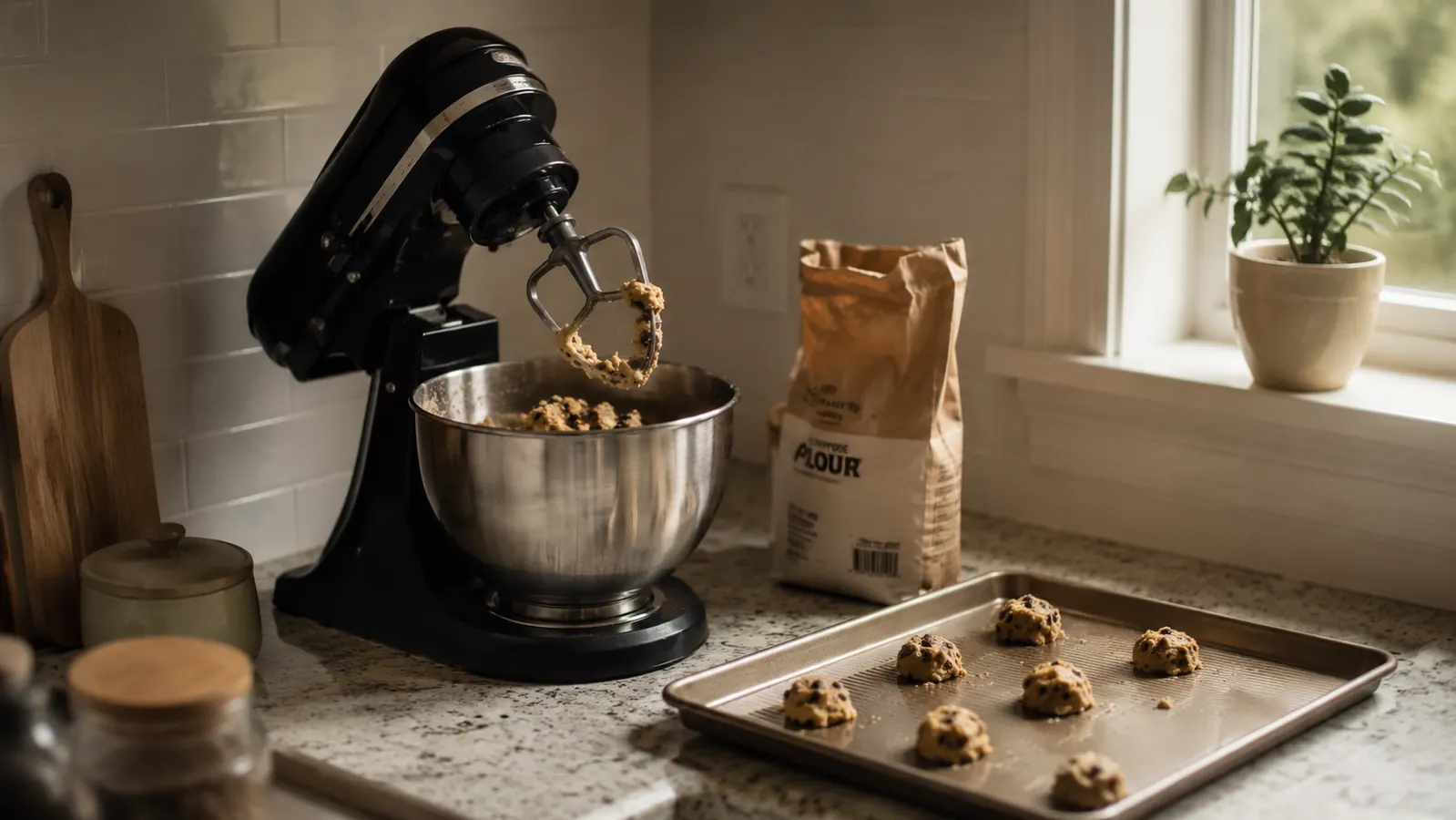
Baking with a full-size stand mixer never made sense on my counter. I have about twenty inches of clear space between the stove and the wall, and a five-quart mixer with its head tilted up eats most of that before I've cracked an egg. The Kitchen in the Box compact stand mixer is what changed that math. It's a 3.2 quart bowl, six speeds, and a footprint small enough that it can live on the counter permanently instead of getting hauled out of a cabinet every time I want to bake, which in practice means I bake more often, not less.
What follows is the method I actually use for cookies, bread dough, and cake batter in this size of bowl, including the places a smaller motor and a smaller bowl behave differently than the bigger machines most recipes assume you own. If you want the longer story of how this particular mixer earned a permanent spot on my counter after years of pulling out a hand mixer for everything, I wrote about that in the full review.
Stop clearing counter space for a mixer you only use twice a month
The Kitchen in the Box stand mixer fits a 3.2 quart bowl and six speeds into a footprint small enough to leave out permanently, so baking stops being a production. Check today's price on Amazon and see if it fits your counter.
Amazon Check Today's Price on Amazon →Step 1: Size the batch to the bowl before you start
A 3.2 quart bowl is not a 5 quart bowl with a little less room. It's genuinely smaller, and the recipe that fits a standard stand mixer without a second thought will climb the sides and start throwing flour out the top of a bowl this size. I learned this the hard way with a double batch of chocolate chip cookie dough that looked fine going in and then crept up over the rim by the third addition of flour, leaving me scraping dough off the outside of the bowl instead of eating cookies.
The fix is simple once you know it: cut the recipe down instead of the mixer up. Most standard cookie recipes, the kind that make four dozen, fit this bowl comfortably at two-thirds of the original amount. A single loaf of bread dough, roughly three cups of flour, sits right at the bowl's realistic working capacity. Cake batter has more give, since it's wetter and less prone to climbing, but I still stop trusting a recipe written for a 5 quart mixer once it calls for more than four cups of flour total.
If a recipe is a family favorite I'm not willing to shrink, I split it and run two batches back to back rather than force it all into one bowl at once. It costs a few extra minutes, but two batches that mix evenly beat one batch that half-mixes because a third of it never made contact with the beater.
Step 2: Match the attachment to the job, not the recipe title
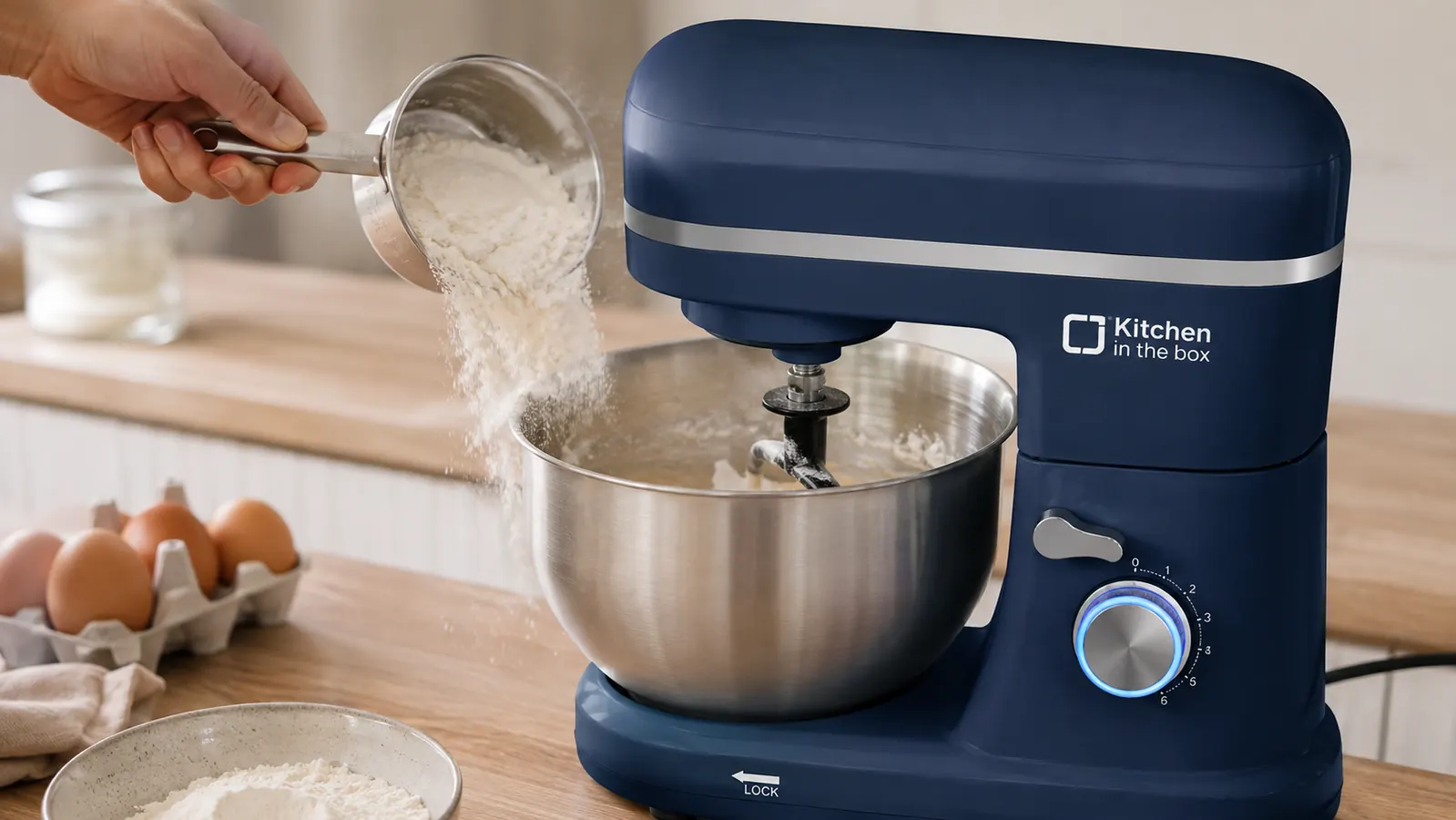
The Kitchen in the Box mixer comes with three attachments, a wire whisk, a flat beater, and a dough hook, and the mistake I made early on was picking based on what the recipe called the dish rather than what the batter or dough actually needed. Cake batter and cookie dough both want the flat beater, since it scrapes closer to the sides of a bowl this size and handles a stiffer mix without the wires of a whisk getting packed solid with dough.
The wire whisk is for anything with real volume to build, egg whites, whipped cream, a light sponge cake batter that needs air folded in rather than just combined. Run cookie dough on the whisk and the wires clog with dough almost immediately, at which point you're not mixing anymore, you're just spinning a solid lump around the bowl. I keep the whisk for whipping only and never reach for it on anything with butter creamed into it first.
The dough hook is its own tool for a reason. It's shaped to fold and stretch dough the way hand kneading does, which the flat beater cannot replicate no matter how long you run it. Bread dough on the flat beater turns into a sticky mess wrapped around the beater's shaft instead of a smooth, elastic ball. Switching to the hook the moment a recipe calls for kneading, not after fighting the beater for two minutes first, is the difference between dough that comes together and dough that doesn't.
Step 3: Build ingredients in order, and keep the head locked until you're done
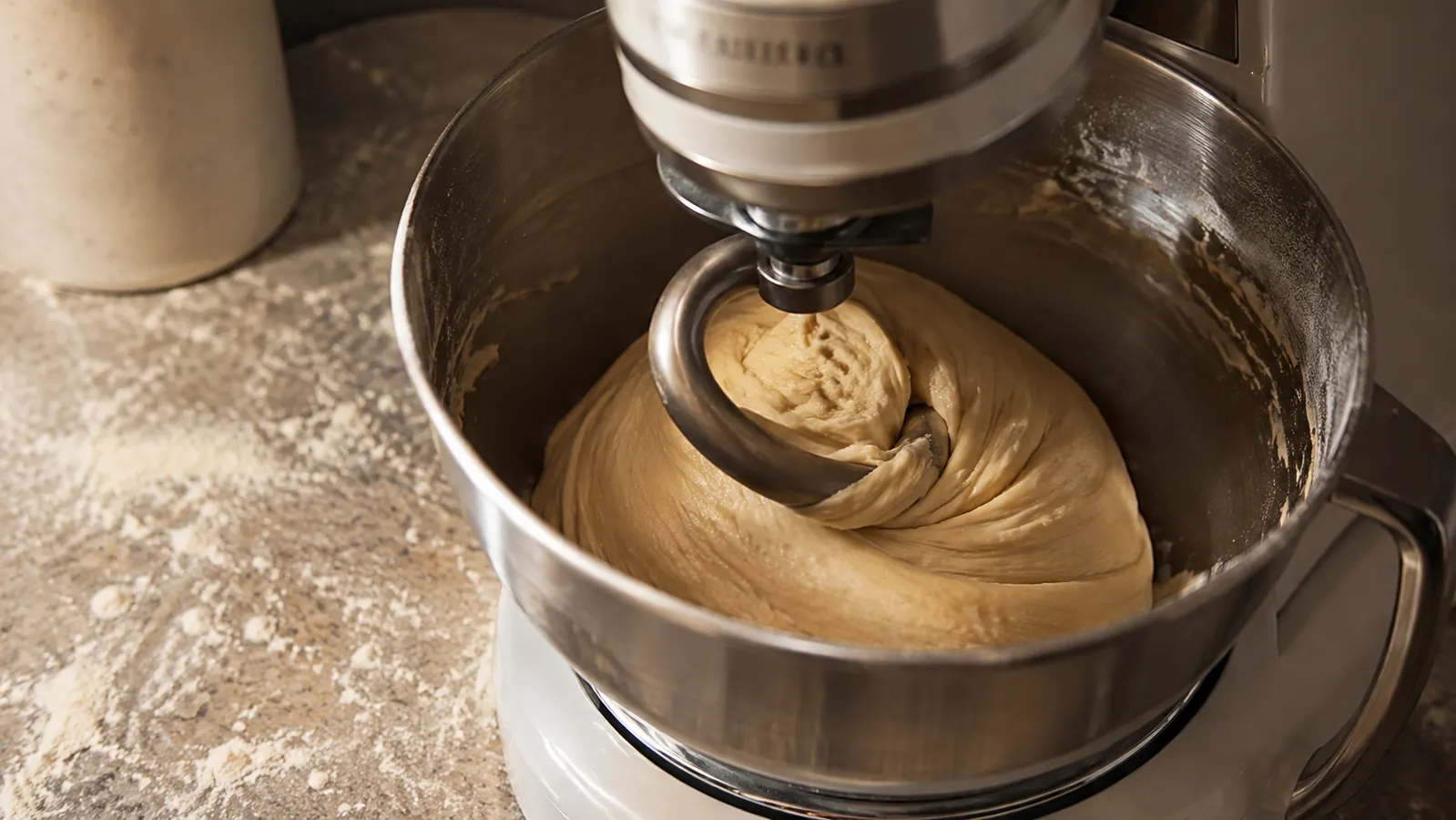
Order matters more in a small bowl than a large one because there's less room for ingredients to find each other on their own. I cream butter and sugar first, on speed two or three, until it's genuinely pale and fluffy, not just combined, since a small motor working a thick, cold butter mixture at that stage benefits from a full minute or two rather than the thirty seconds a bigger machine might get away with.
Eggs go in one at a time after that, mixed just until each one disappears into the batter before the next goes in. Dumping all the eggs in together on this size of mixer tends to slosh liquid up the sides faster than the beater can pull it back down, which is how egg ends up on the counter instead of in the bowl. Dry ingredients come last, added in two or three additions on the lowest speed, since flour thrown into a bowl this size on anything above speed one comes back out as a small cloud over the counter.
The tilt-head design on the Kitchen in the Box mixer is genuinely useful here, since it locks down flat while running and only tilts up when you release it, which keeps the bowl steady during the parts of a recipe where a wobble would mean batter splashed against the sides instead of mixed into the middle. I don't unlock the head mid-recipe just to check consistency. Stopping the motor and lifting the beater out for a look does the same job without loosening anything.
Step 4: Watch the motor, not the clock, on heavy dough
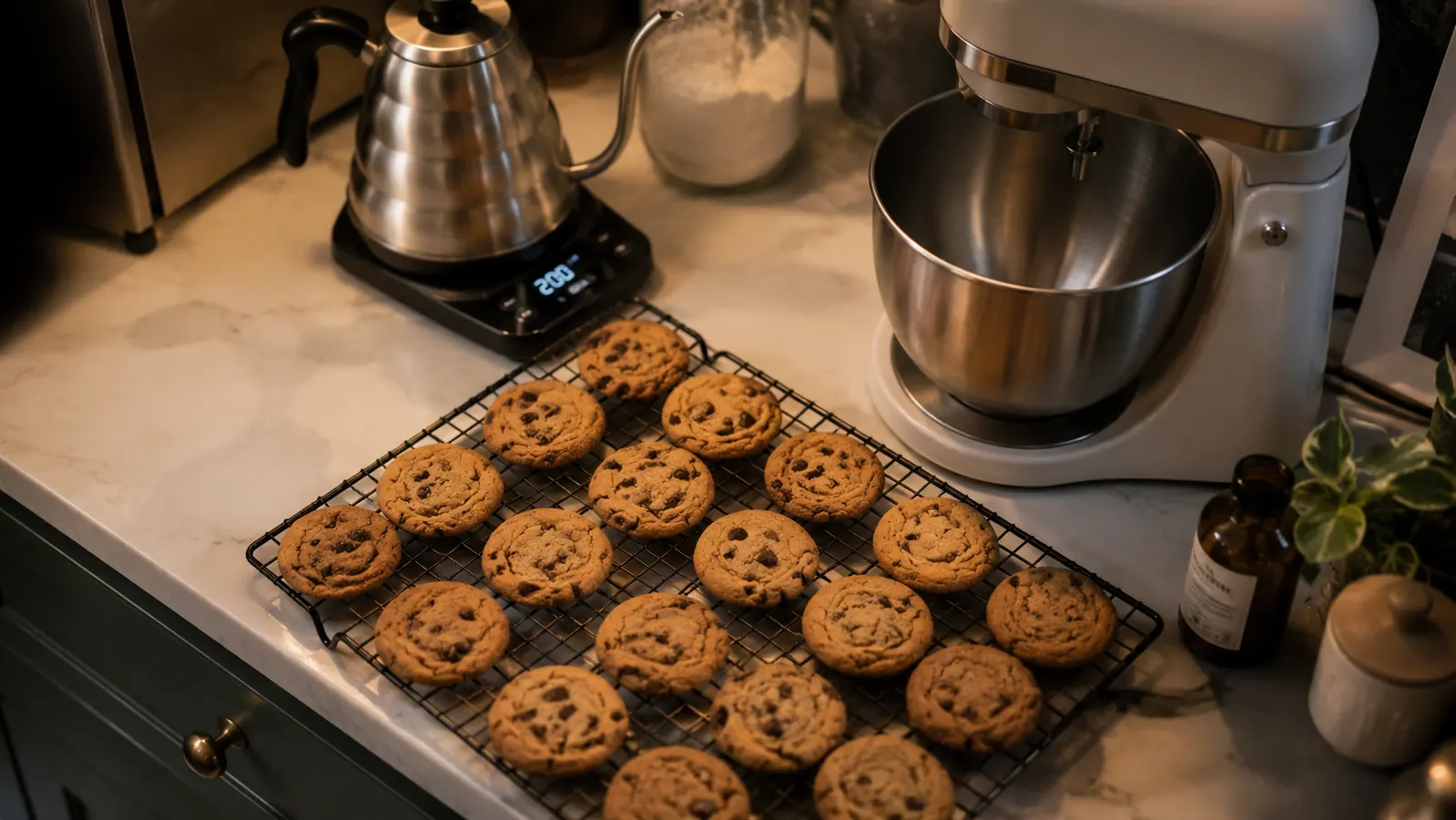
A compact mixer has a smaller motor than a full-size one, and pretending otherwise is how you end up stalling it. Bread dough is where this shows up first. A recipe written for a heavier-duty machine might call for eight minutes of kneading at a set speed, but on this mixer I watch and listen instead of trusting the number. If the motor's tone drops, gets noticeably slower, or the bowl starts fighting the base instead of turning smoothly with it, that's the signal to stop, not push through.
What actually works is kneading in shorter stretches, two to three minutes at a time on speed two, with a thirty-second rest between each stretch. The rest isn't wasted time. It lets the motor cool slightly and lets the dough relax, which if anything improves the final texture rather than hurting it. A stiff, low-hydration dough, the kind for bagels or a dense sandwich loaf, is the one job I'd genuinely think twice about giving to a mixer this size at all, since it's the closest this machine comes to being underpowered for the task.
Cookie dough and cake batter almost never stress the motor the way bread dough does, since they're softer and never need more than a few minutes of mixing regardless of bowl size. The motor strain issue is specifically a heavy-dough problem, not a general limitation of the machine, and once I understood that, I stopped worrying about it for anything except bread.
Step 5: Clean and dry the bowl and attachments right after, not later
The stainless bowl, flat beater, and whisk on this mixer are dishwasher safe, but I hand wash them anyway when there's dried butter or dough stuck to the beater's wires, since a dishwasher cycle doesn't always fully clear a beater's tight corners and I'd rather not find that out mid-recipe next time. The dough hook is the one attachment I always hand wash, because flour paste dries hard in the crevice where the hook curves, and once it's baked on by a hot dishwasher cycle it takes real scrubbing to get off.
I wipe the mixer's base and the area around the speed dial with a damp cloth before anything dries there, since flour and sugar residue on a control dial gets sticky fast and starts affecting how smoothly the speed selector turns. It takes under a minute and it means the machine never builds up the grime that eventually makes a control feel gritty.
Because the whole unit is light enough to lift with one hand, I don't leave it sitting dirty on the counter between uses the way I might with something heavier that's a chore to move. It gets wiped down, the bowl gets rinsed, and it goes right back to its spot on the counter, ready for the next time a recipe comes together on a random weeknight instead of a planned baking day.
What Else Helps
A splash guard, if the mixer you buy comes with one, earns its keep on anything involving flour or powdered sugar. Without it, the first few seconds of any dry ingredient addition on this size of bowl sends a fine dust over the counter, and a guard that clips around the bowl's rim contains most of that before it ever leaves the mixer. I didn't use mine for the first month I owned this machine and regretted every flour-dusted stretch of counter it would have saved me.
Room-temperature butter matters more on a smaller motor than people expect. Cold butter straight from the refrigerator forces the Kitchen in the Box mixer to work harder just to break it down before it can properly cream with sugar, which adds minutes to a step that should take one. I set butter out an hour before I plan to bake, and on the nights I forget, cutting it into small cubes first cuts that creaming time roughly in half.
If you're still deciding whether a stand mixer earns its space over a hand mixer you already own, I laid out the real tradeoffs, power, speed, and what a hand mixer genuinely can't do, in this comparison. And if you want the broader case for why a compact mixer holds its ground in a kitchen this size instead of getting shelved after the first month, that's covered in ten reasons it fits where a full-size machine wouldn't.
For the honest version, including where the bowl capacity genuinely limits what I can bake in one pass and how loud the motor gets on speed six, I go through all of that in the full honest review. It isn't a machine that pretends to be something bigger than it is. It's just sized correctly for the counter and the batches I actually bake.
It didn't make me bake more ambitiously. It just made baking possible on a Tuesday instead of only on a day I'd planned to clear the counter for it.
A stand mixer that actually fits where you'd put it
If a full-size stand mixer never made it onto your counter because there wasn't room, the Kitchen in the Box compact stand mixer is built for the batch sizes and the counter space described above. Check today's price on Amazon.
Amazon Check Today's Price on Amazon →