
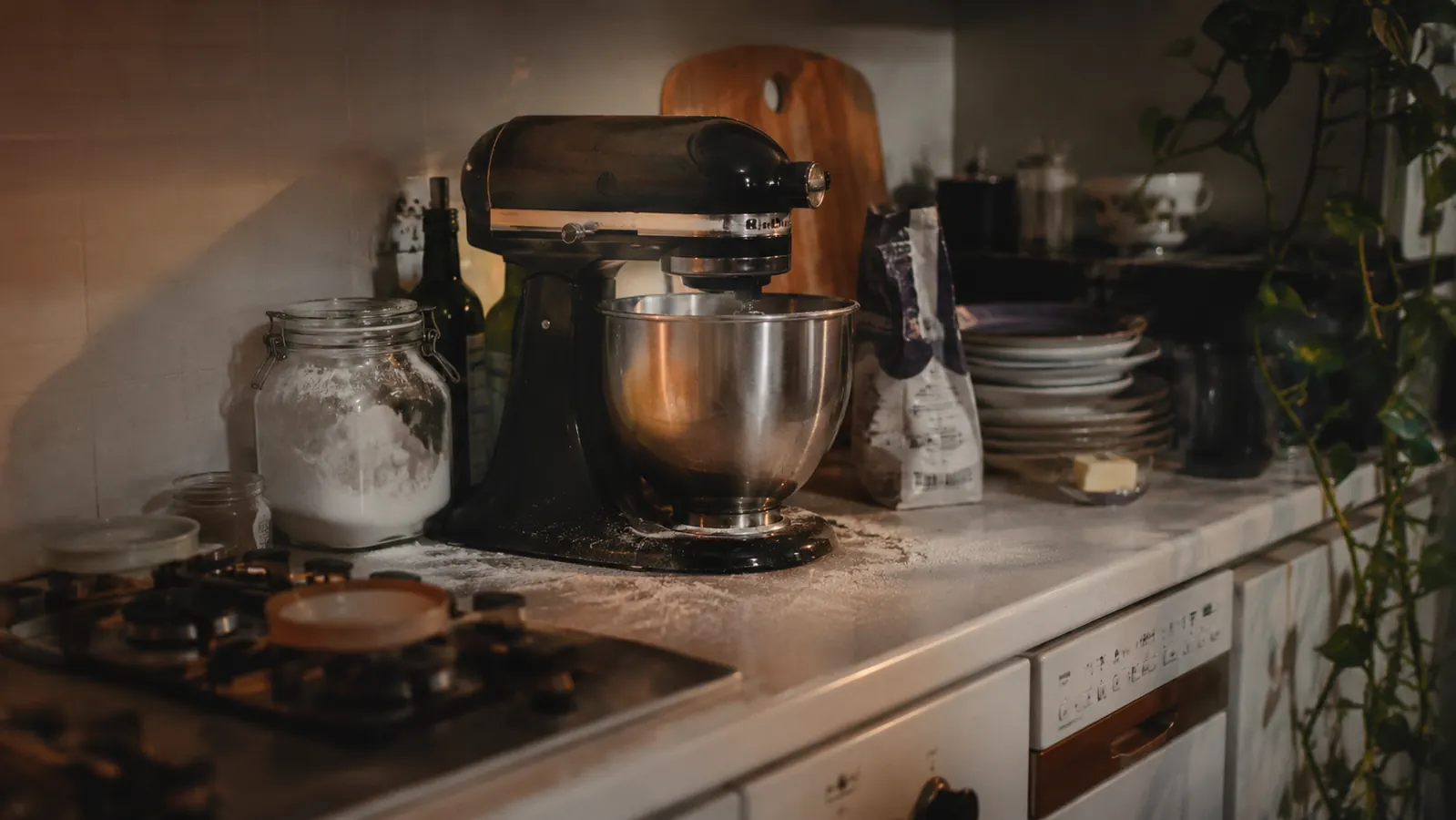
My counter is about three feet of laminate between the stove and the sink, and nothing gets to live there permanently unless I actually reach for it more weeks than not. I bought the Kitchen in the Box stand mixer after giving away a hand-me-down full-size mixer that hadn't left its box in over a year, mostly because it never fit anywhere except the top of the fridge, and getting it down for one batch of cookies felt like a whole project. The Kitchen in the Box mixer lives on the counter now. It has for the better part of a year, which in this kitchen is the only review that actually counts.
I bake on whatever schedule the week hands me, sometimes at nine at night, sometimes on a Sunday afternoon with flour already on my hands before I've decided what I'm making. A mixer that needs ceremony to use, or that eats a shelf I don't have, doesn't survive that schedule. The Kitchen in the Box mixer does, mostly because it never asks me to plan around it. Here are ten specific reasons this small 3.2-quart mixer keeps earning its spot, and the one job at the end I still don't hand it. For the step-by-step version of how I actually use it, I wrote up baking with it in a tiny kitchen separately.
The mixer that stopped hiding on top of the fridge
If your stand mixer only comes out twice a year because it's too big to leave sitting out, that's a storage problem pretending to be a baking habit. Here's the one that fixed it for me.
Amazon Check Today's Price on Amazon →It doesn't need its own real estate
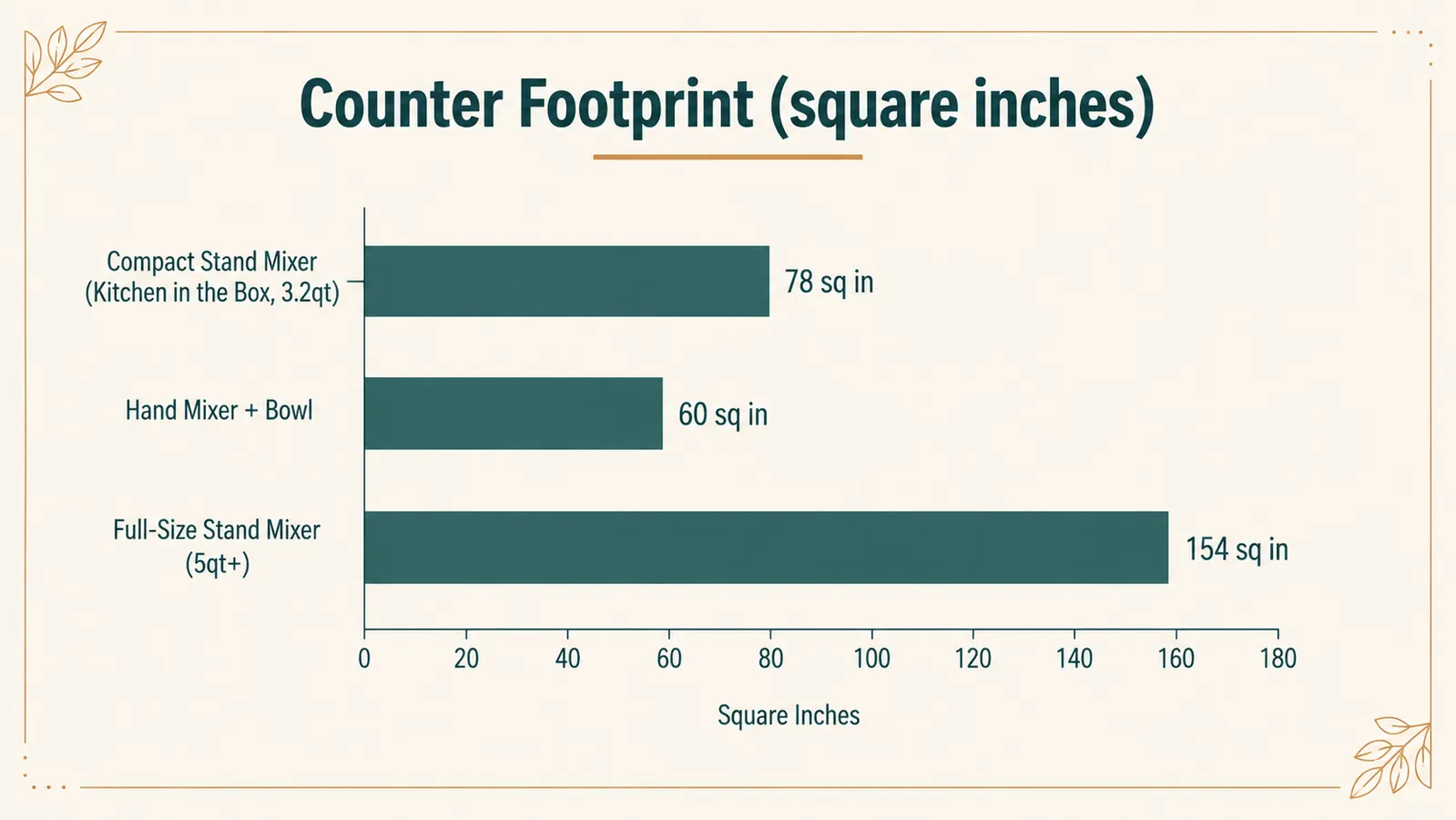
The Kitchen in the Box mixer takes up roughly the footprint of a toaster oven, not a small appliance that demands its own end of the counter. I can slide it a few inches to the side when I need the space and pull it back out in seconds, which is the whole reason it stays out instead of getting boxed up and forgotten in a closet like the last one did. I've measured it against a cutting board more than once out of curiosity, and it loses barely any ground.
Six speeds cover almost everything I actually bake
I'm not running a bakery, so I don't need a dozen speed settings I'll never touch. Six is enough to go from a slow fold on speed one to whipping egg whites stiff on speed six, and I've never once wished for a setting in between. The jumps feel deliberate, not like someone padded a spec sheet to look more impressive than the mixer actually is.
The dough hook replaced kneading by hand
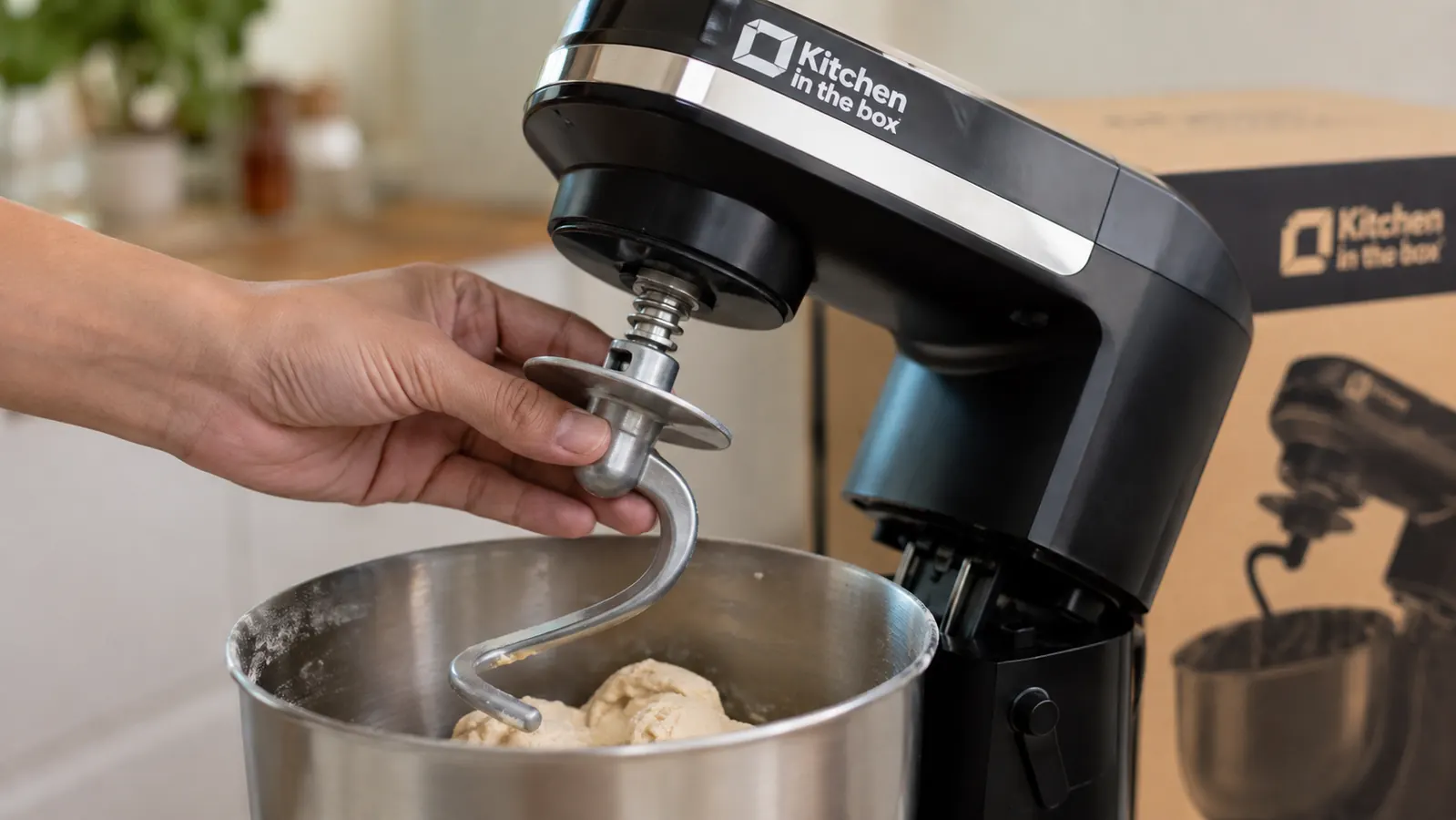
I used to knead bread dough on the counter for ten minutes at a stretch, which is fine once a month and miserable on a Tuesday night when I just want dinner rolls with dinner. The dough hook on this mixer handles a standard loaf's worth of dough without straining or walking itself off the counter, and I get my counter space back the second it's done. My forearms noticed the difference before anything else did.
Light enough to move, heavy enough to stay put
It's light enough that I can lift it one-handed to wipe underneath it, but it has enough weight low in the base that it doesn't creep across the counter on high speed the way some smaller mixers do. That balance matters more than raw power specs when you're mixing something thick like a stiff cookie dough that fights back on the way to fully combined.
3.2 quarts is the right size for how I actually bake
A standard batch of cookies or a single loaf of bread fits comfortably in this bowl without flour flying out the top or the beater struggling to reach the bottom. A bigger bowl built for double batches just means I'm scraping down more unused space every time I bake for one household, not a bake sale I'm supplying.
The attachments store in one small spot, not a drawer
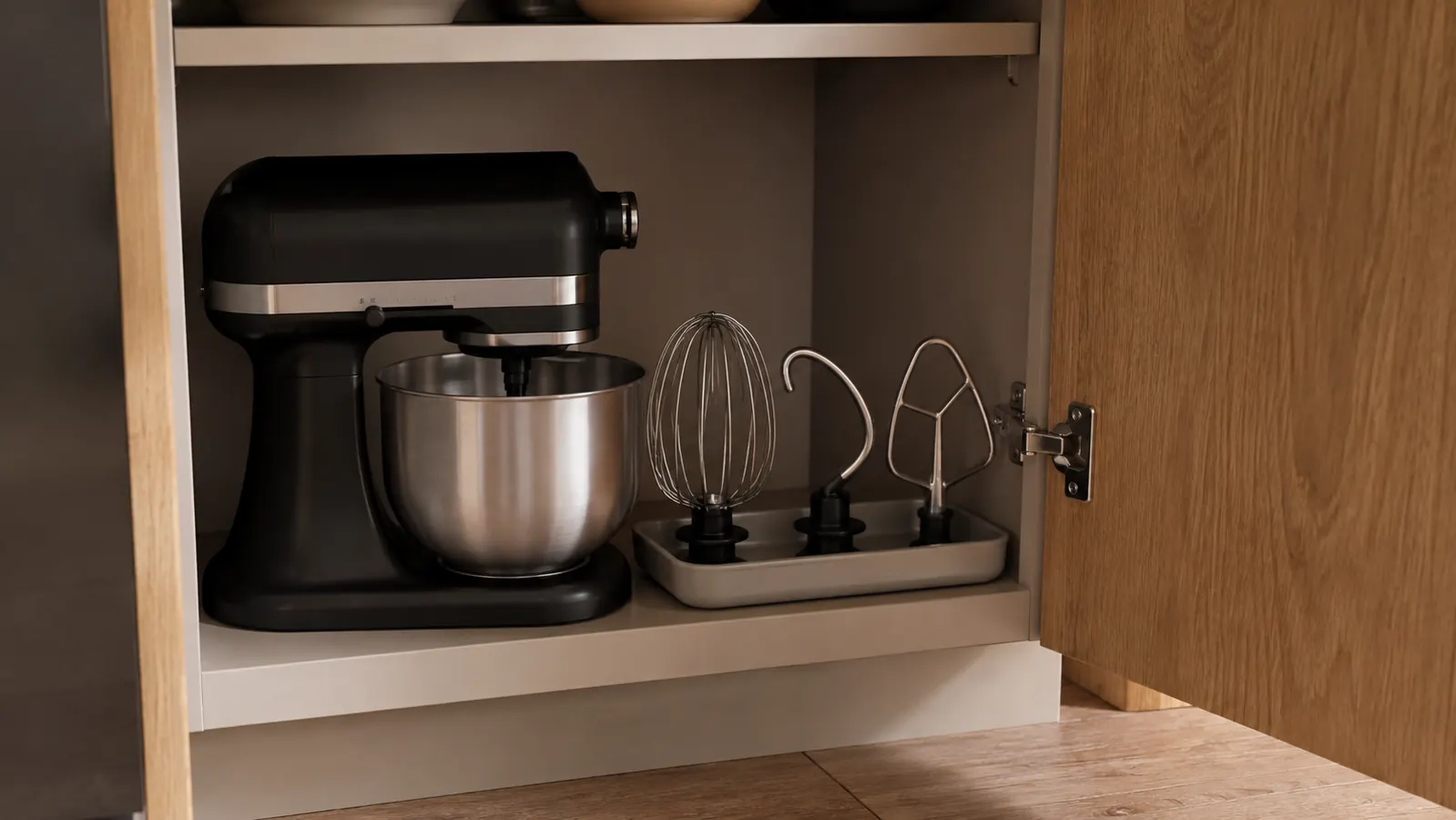
The whisk, dough hook, and flat beater are small enough to sit in a shallow tray next to the mixer instead of eating an entire kitchen drawer the way full-size attachments do. I know exactly where all three are every time, because there's nowhere else for them to end up and nothing else competing for that same tray.
It tilts back instead of needing headroom above it
The head tilts up so I can swap attachments or scrape the bowl without lifting the whole unit or needing clearance above it, which matters under a cabinet that sits lower than I'd like. I've used mixers that needed a good foot of open air above them just to release the bowl, and that's not a luxury my kitchen has ever offered.
Cleanup is a bowl and three small parts
There's no motor housing to wipe carefully around, no crevices where batter hides for a week. The bowl and the three attachments go straight into the sink, and I'm done in under two minutes. Compare that to picking dried cake batter out of a full-size mixer's tilt hinge, which I have absolutely done before and would not do again if I had a choice in the matter.
It's quiet enough for a late bake
When I'm baking at nine or ten at night because that's when the week finally slowed down, I don't want something loud enough to announce it through a shared wall. This one runs at a level I'd call a hum, not a rattle, even on the higher speeds mixing something dense like cookie dough or a thick cake batter.
It's affordable enough to actually use, not preserve
At a reasonable everyday price point, I don't treat the Kitchen in the Box mixer like a wedding gift I'm scared to scratch. I use it for small, ordinary jobs, whipping cream for one dessert, mixing a single batch of muffins, because it never felt precious. The full story of how it's held up under regular use is in my write-up on getting back into baking.
What I'd Skip
I would not buy this expecting it to handle double batches of stiff bread dough back to back or stand in for a heavy-duty mixer used daily for a small business. The Kitchen in the Box motor is built for a household kitchen, not production baking, and pushing it past its 3.2-quart bowl just means an overworked motor and dough that climbs out the sides. If you're baking in volume every week, a larger, more powerful mixer will save you the frustration of running smaller batches twice. I get into where the real limits are in my honest review of this mixer, including the one thing I still wouldn't ask it to do. For a straight comparison against going even smaller, I also put it up against a hand mixer to see which one actually earns a spot in a tiny kitchen.
It's not the mixer I'd pick for a bakery. It's the one that never asked me to give up counter space I didn't have to spare.
Small mixer, real difference on a small counter
For baking in small batches without giving up a shelf or a chunk of counter to something you'll use twice a year, this is the mixer I still reach for.
Amazon Check Today's Price on Amazon →