
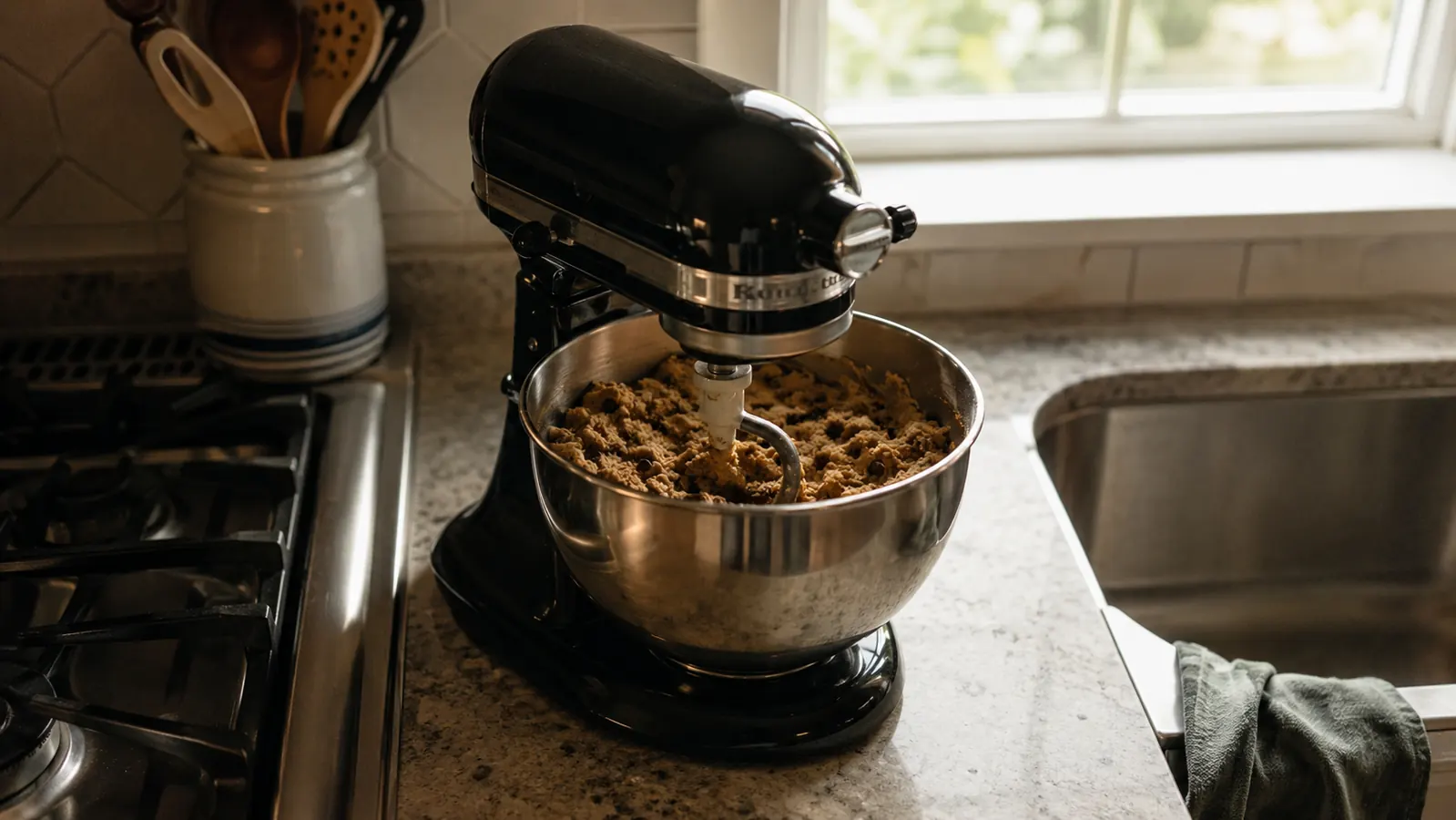
The stand mixer I owned before this one lived in a cabinet under the stairs for two years before I finally sold it at a yard sale for eight dollars. It was a proper 5 quart machine, heavy as a bowling ball, and every time I wanted to use it I had to haul it out, clear counter space I didn't have, and put it away wet because I never had the patience to dry a bowl that size at eleven at night. When I replaced it with a Kitchen in the Box stand mixer this past February, I wasn't looking for an upgrade. I was looking for something I would actually reach for.
I bake in a kitchen with about fourteen inches of clear counter between the stove and the sink, on a schedule that has more to do with when the evening finally settles down than with any plan I made that morning. Six months and something like ninety batches of dough and batter later, here is what I've learned about the Kitchen in the Box mixer, including the parts that annoyed me enough to write them down.
Before I bought it, I read through more reviews than I want to admit, mostly looking for anyone who had used a mixer this small for actual bread, not just cake mix from a box. Most reviews talked about how cute and light it was and stopped there. Nobody mentioned what happens six weeks in, once the novelty wears off and it's just another tool competing for counter space with the coffee maker. That's the gap I'm trying to fill here.
The Quick Verdict
A genuinely small stand mixer that handles cookie dough and a single loaf of bread well, but the 3.2-quart bowl and plastic gearing show their limits fast once you push past small batches.
Amazon Check Today's Price →A mixer you'll actually leave on the counter, not one you'll hide in a cabinet
If the reason your old mixer never got used was the size of it, not the price, this is worth a look. See today's price and current availability on Amazon.
Amazon Check Today's Price on Amazon →How I've Used It
I didn't test this mixer with one showcase recipe and call it done. Over six months it has made chocolate chip cookies almost every Sunday, a basic white sandwich loaf every other week, whipped cream for a birthday cake in April, and pizza dough more times than I can count. That's the actual range I use a mixer for, nothing exotic, just the stuff that shows up on a normal week.
The Kitchen in the Box comes with three attachments: a dough hook, a flat beater, and a wire whisk. I use all three regularly, which surprised me. My old mixer's whisk sat in a drawer for two years because I never trusted it not to fling batter across the stove. This one's whisk has a tighter wire pattern and doesn't splatter nearly as much at low speed.
It stays out on the counter now, which is the real test for me. A mixer that lives in a cabinet doesn't get used, no matter how good it is on paper. This one is light enough, a little over seven pounds, that I don't dread moving it, except there's nowhere to move it to because it just sits by the toaster now.
There's a rhythm to it now that I didn't have with the old mixer. Cookie dough goes in on autopilot while I'm doing something else in the kitchen, because I trust the machine to run for four minutes without me hovering over it. That's a small thing, but it's the difference between a tool that fits into a real evening and one that demands your full attention the whole time.
The Bowl, the Attachments, and What 3.2 Quarts Actually Means
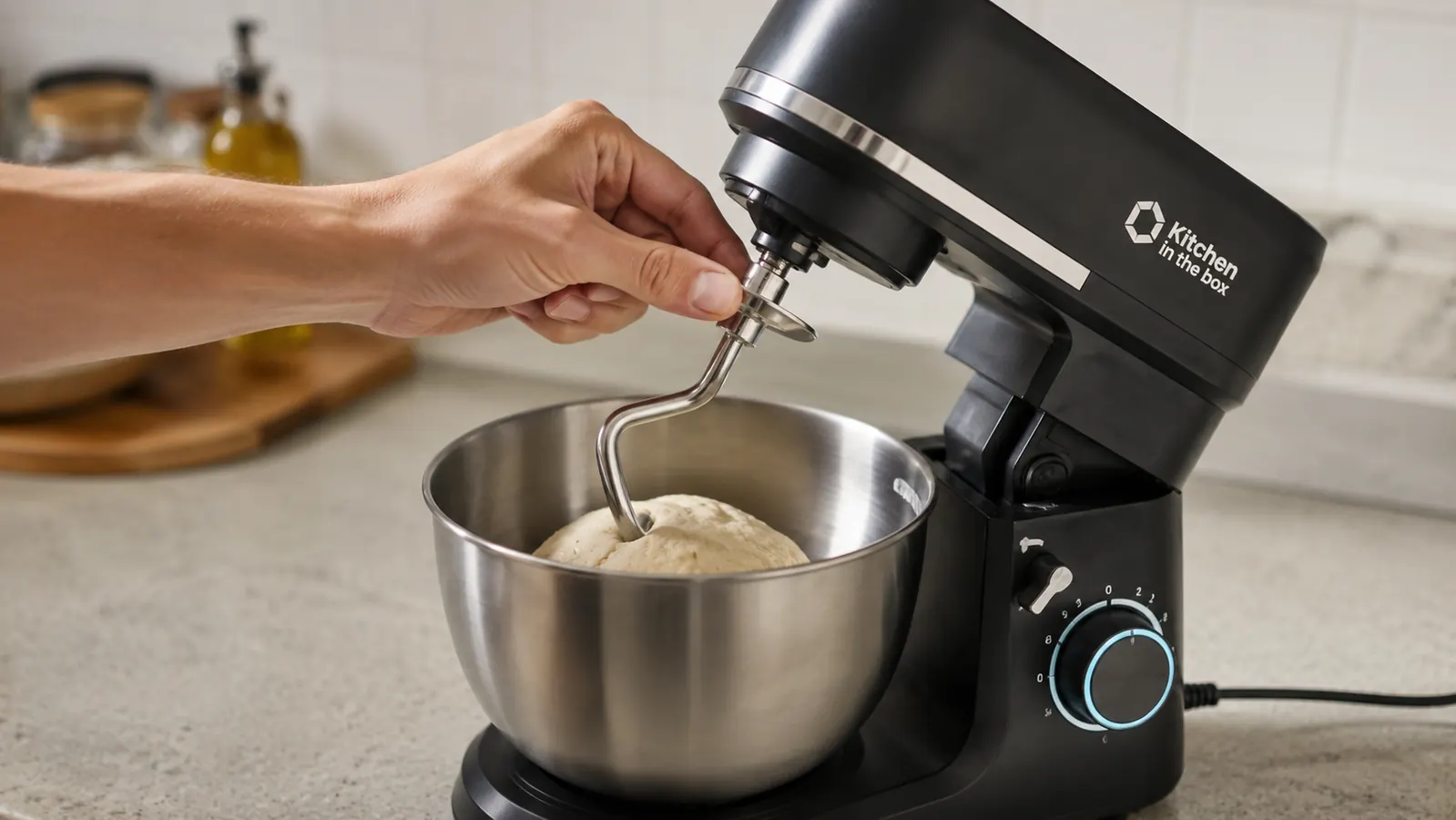
3.2 quarts sounds small until you actually bake with it, and then it sounds about right for one household making one batch of something. A single loaf of sandwich bread, roughly 3 cups of flour, fits with a little room to spare. Try to double that recipe and the dough climbs the hook and starts working itself up and over the top of the bowl instead of getting kneaded properly.
The base runs six speeds and the head tilts back for access to the bowl, the same basic mechanism far more expensive mixers use. What's different here is the gearing inside, which is mostly plastic rather than the metal gears in a heavier machine. That keeps the mixer light and quiet at low speeds, but it's also the first thing I'd point to if you asked where the lighter cost shows up.
The dough hook has a light nonstick coating that has held up fine through repeated bread batches, no chipping so far. The flat beater and whisk are both plain stainless steel, easy to rinse under the tap between uses instead of needing a full wash every time, which matters more than it sounds like when you're baking on a weeknight.
There's no splash guard, which the bigger machines usually include. I found out the hard way the first week, flour dusted across the counter on speed four before I learned to start slow and work up. It's not a dealbreaker, just something the listing photos don't tell you, and now I automatically start every batch on speed one out of habit.
Six Months of Saturday Mornings
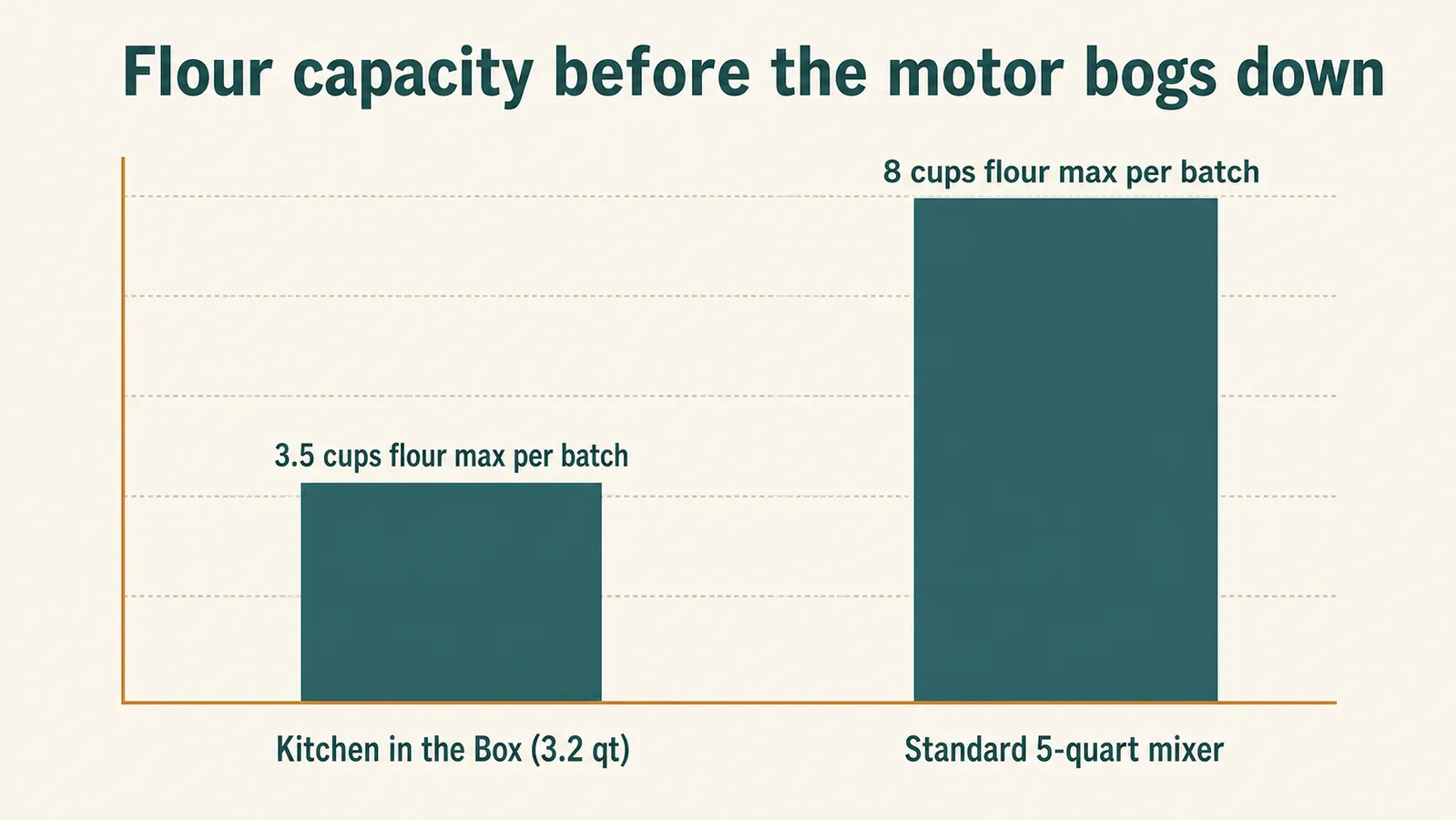
The motor has never quit on me, but it has bogged down twice, both times on stiffer bread dough that pushed past what the bowl is really meant to hold. It doesn't stall outright, it just slows and strains, and I've learned to stop, scrape the bowl, and let it rest rather than push through on speed six.
The worse of the two times was a banana bread batter I'd loaded up with extra flour to make it thicker than usual, more out of habit than any real plan. The mixer slowed to a crawl and started making a labored sound I hadn't heard before. I turned it off, split the batter into two smaller bowls, and finished each half separately. It worked, but it told me exactly where the ceiling is.
Noise-wise it's quieter than I expected, closer to a blender on its lowest setting than the deep grinding hum my old mixer made. That matters more than it should when you're mixing cookie dough after the rest of the house has gone quiet for the night.
Cleanup is straightforward. The bowl isn't dishwasher safe by the manual's own instructions, so I hand wash it, which takes maybe ninety seconds given how much smaller it is than a standard mixing bowl. The attachments go in the dishwasher's top rack without any issue.
Where It Struggles
Heavier bread doughs are the real limit. Anything past about 3 to 3.5 cups of flour and I switch back to kneading by hand, because the mixer either bogs down or the dough starts to climb the hook instead of turning through it. If you bake bread in real quantity, this isn't the machine for that, and I laid out where the line actually sits in the comparison against a hand mixer I wrote after living with both.
The mixer also isn't heavy enough to stay perfectly still under a stiff load. On thick cookie dough it will walk an inch or two across the counter if I don't keep a hand near the base. It's a small annoyance, but it's the kind of thing nobody mentions in a five-star review, so I'm mentioning it here.
The power cord is also shorter than I expected, which sounds trivial until your only outlet is on the far side of the counter from where you actually want to mix. I ended up moving my toaster to make room closer to the outlet, which is its own small hassle in a kitchen this size.
What I Looked At Before Buying
Before I bought the Kitchen in the Box, I seriously considered just buying a good hand mixer instead and calling it done. A hand mixer is smaller, cheaper, and stores in a drawer instead of on the counter. I ended up going with the stand mixer because kneading bread dough with a hand mixer attachment is miserable, and that was the one task I actually wanted off my plate. I walked through the full backstory of that decision in the story of why I switched to a smaller mixer, if you're curious how I landed here.
I also thought about saving up for a full-size 5-quart machine again, the kind with metal gearing that can handle a double bread batch without complaint. What talked me out of it was the counter. I wrote up the specific reasons a smaller mixer made more sense for my kitchen in this piece on why a compact stand mixer fits small kitchens, and most of it still holds six months later.
What I didn't consider seriously, in hindsight, was just going without a mixer at all and doing everything by hand. I'd done that for about a year before the yard sale mixer, and it's a real option if you only bake occasionally. But I bake most weeks, and the Kitchen in the Box turned baking from a chore I put off into something I actually start on a Tuesday night without thinking twice about it.
What I Liked
- Light enough, about 7 lbs, to actually leave out on the counter
- Handles a single loaf of bread dough or a full batch of cookies without strain
- Quieter than a full-size mixer, useful for baking late without waking the house
- Whisk attachment doesn't splatter badly at low speed
- Small footprint that fits a narrow counter
Where It Falls Short
- Bogs down on bread dough over about 3.5 cups of flour
- Plastic gearing inside, not metal, which is where the lighter cost shows up
- Can walk slightly on the counter under a stiff dough load
- Bowl isn't dishwasher safe per the manual
- No splash guard included
It's not a mixer that pretends to be more than it is. It's a mixer that fits the counter I actually have.
Who This Is For
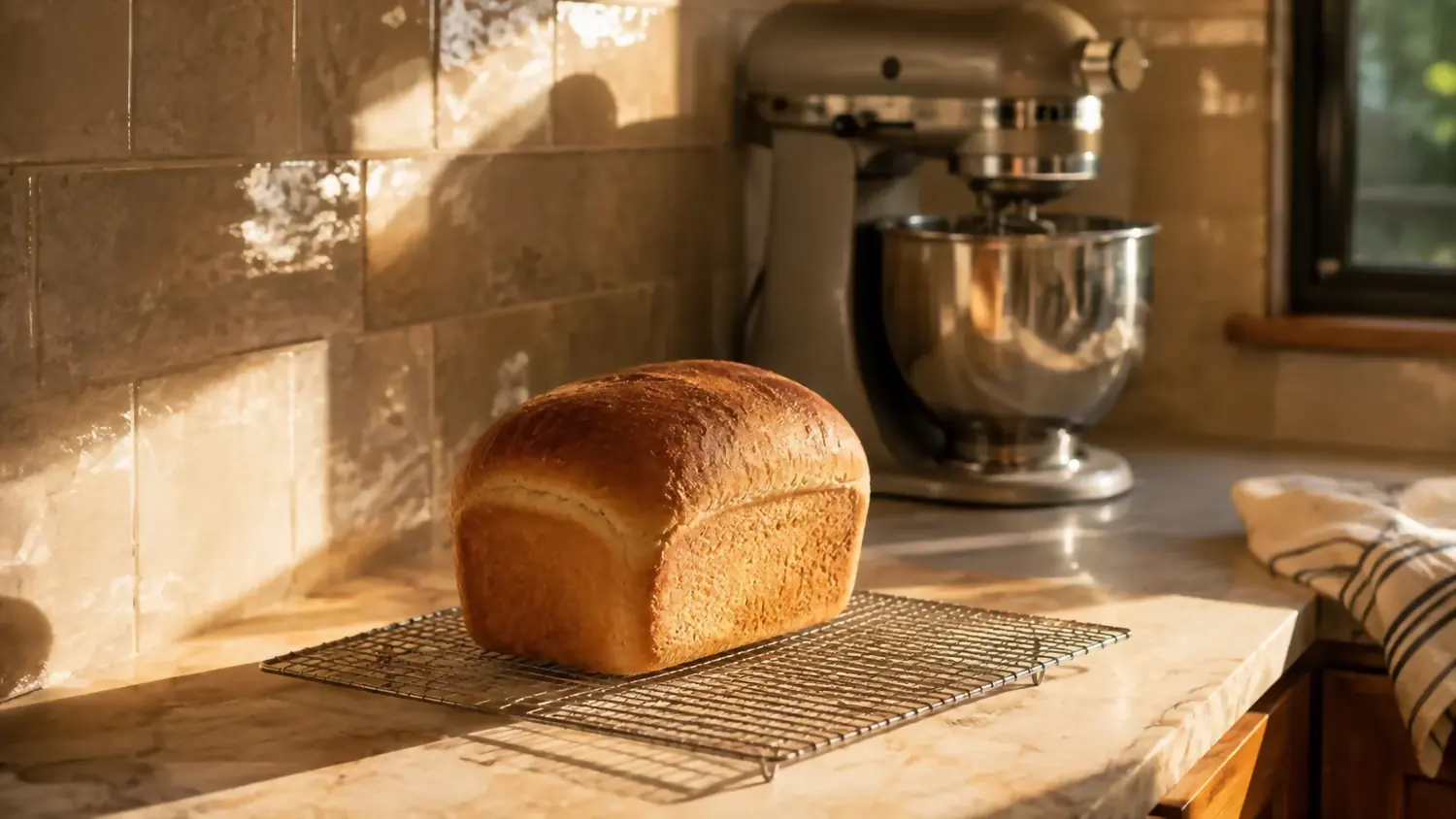
This makes sense for someone baking for one or two people, in a kitchen where counter space actually runs out, who wants cookies and a basic loaf of bread without hauling out something the size of a toaster oven. If that's the batch size you actually bake, the Kitchen in the Box earns its spot. I walked through the day to day version of that routine in how I actually bake with it in a tiny kitchen, if you want the specifics.
It also makes sense if the real problem with your last mixer wasn't performance, it was that it never left the cabinet. A smaller, lighter machine you'll actually pull out on a Tuesday beats a more powerful one gathering dust behind the mixing bowls you never use either.
Who Should Skip It
If you bake bread in real volume, multiple loaves at once, or you regularly double cake recipes for a crowd, this mixer will frustrate you inside a month. The bowl and the motor are both sized for small batches, not for anyone feeding more than a handful of people at a time. I get into the specific failure points in the honest review, including the two times the motor actually struggled on me.
If counter space isn't actually your constraint and you'd rather have the headroom for bigger batches from day one, save the smaller purchase and go straight for a full-size machine. Buying this one first and outgrowing it in a few months isn't a cheaper path in the long run, it's just a delayed second purchase.
Small batches, small counter, one mixer that fits both
Six months in, this is still the mixer I reach for on a normal week. Check today's price and current availability before you decide.
Amazon Check Today's Price on Amazon →