
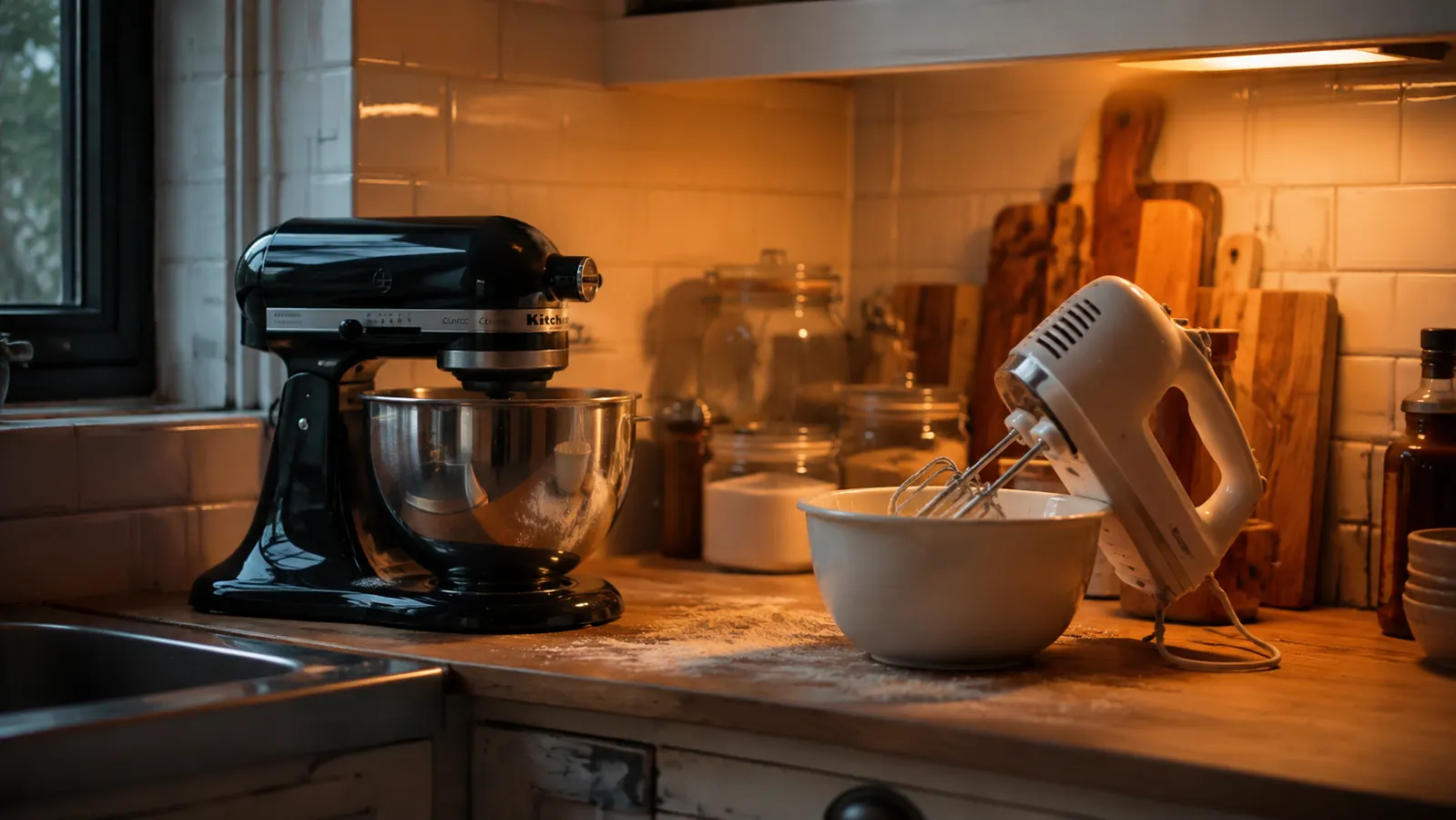
My stand mixer is a Kitchen in the Box, the 3.2 quart model with six speeds and a dough hook, a whisk, and a flat beater in the box. I bought it after giving away a full-size stand mixer that had claimed a permanent corner of my counter and mostly guilted me from over there instead of getting used. The question I hear most from people eyeing my counter and their own cramped one is whether a compact stand mixer like the Kitchen in the Box actually earns its space, or whether a hand mixer does the same job for less money and less commitment. I ran a Hamilton Beach 6-Speed Hand Mixer alongside the Kitchen in the Box for several weeks of real baking, cookies, bread dough, and whipped cream, to find out where each one actually wins.
Short answer: if you bake bread dough, whip egg whites to stiff peaks, or need a mixer to run unattended while you do something else, the stand mixer earns its keep. If you mostly beat two eggs, whip a small bowl of cream, or stir together a box cake mix, a hand mixer does that job for less money and disappears into a drawer when you're done. I used the Kitchen in the Box daily for six months before this comparison, which I cover in full in my long-term review, and I ran the Hamilton Beach through the same recipes over three weeks to keep the test fair.
How I Ran the Comparison
For this comparison I used the Kitchen in the Box Stand Mixer, the 3.2 quart version with the tilt-back head and the stainless bowl that locks into the base, against a Hamilton Beach 6-Speed Hand Mixer, the model most people mean when they say a basic hand mixer. Neither is the top-tier version of its brand. Both are the ones that show up first in search results and the ones most people actually buy. I ran the same three recipes through both: a stiff batch of oatmeal cookie dough, a bowl of whipped cream for a birthday, and a loaf of no-knead bread dough that needed real kneading, not just stirring. That felt like the fair fight, and the one I'd want before spending money either way.
I also timed how long each one actually took from counter to clean, because a mixer that saves five minutes of mixing but costs ten minutes of setup and teardown hasn't really saved me anything. The Kitchen in the Box needs its bowl locked into the base and the right attachment clicked into the head before it runs, maybe forty-five seconds of assembly. The Hamilton Beach is ready the moment you plug it in and drop the beaters into their sockets, closer to fifteen seconds. That gap matters more on a rushed weeknight than it does on a lazy weekend.
| What Matters | Kitchen in the Box Stand Mixer | Hamilton Beach 6-Speed Hand Mixer |
|---|---|---|
| Bowl Included | Yes, 3.2 quart stainless bowl locks into the base | No bowl, you supply your own mixing bowl |
| Hands-Free Operation | Runs unattended once the bowl and attachment are locked in | Requires holding it in one hand the entire time |
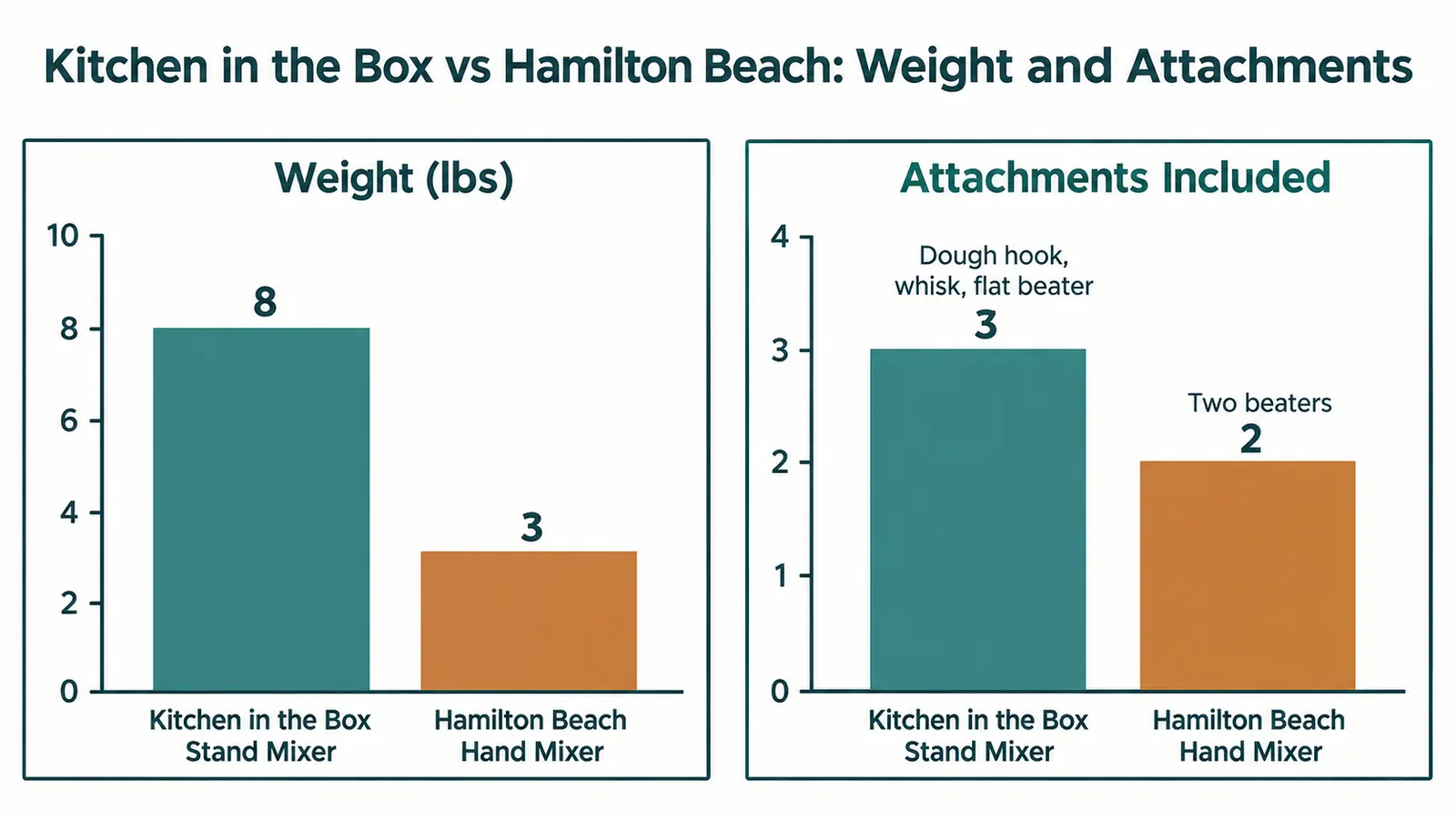
| Weight | About 8 pounds, meant to stay in one spot | Under 3 pounds, easy to lift with one hand |
| Countertop Footprint When Stored | Needs a fixed shelf or cabinet spot about the size of a toaster | Slides flat into a drawer, the smaller footprint of the two |
| Power for Stiff Dough | 6 speeds and a dough hook that kneads bread dough without stalling | Motor strained and slowed noticeably on the same bread dough |
| Attachments Included | Dough hook, wire whisk, and flat beater all included | Two standard beaters only, no dough hook |
| Noise on High Speed | Loud enough to hold a conversation over, comparable to a blender | Quieter at low speeds, but strains audibly on thick batter |
| Cleanup | Bowl, beater or hook, and splash guard all need washing | Just the two beaters rinse clean in under a minute |
| Best For | Repeated baking, bread dough, and batches that run several minutes unattended | Quick eggs, whipped cream, and box cake mix in small batches |
Baking more than once a week? The Kitchen in the Box kneads dough while you do something else.
Six speeds, a dough hook, a whisk, and a flat beater, all in one 3.2 quart mixer sized for a real kitchen counter.
Amazon Check Today's Price on Amazon →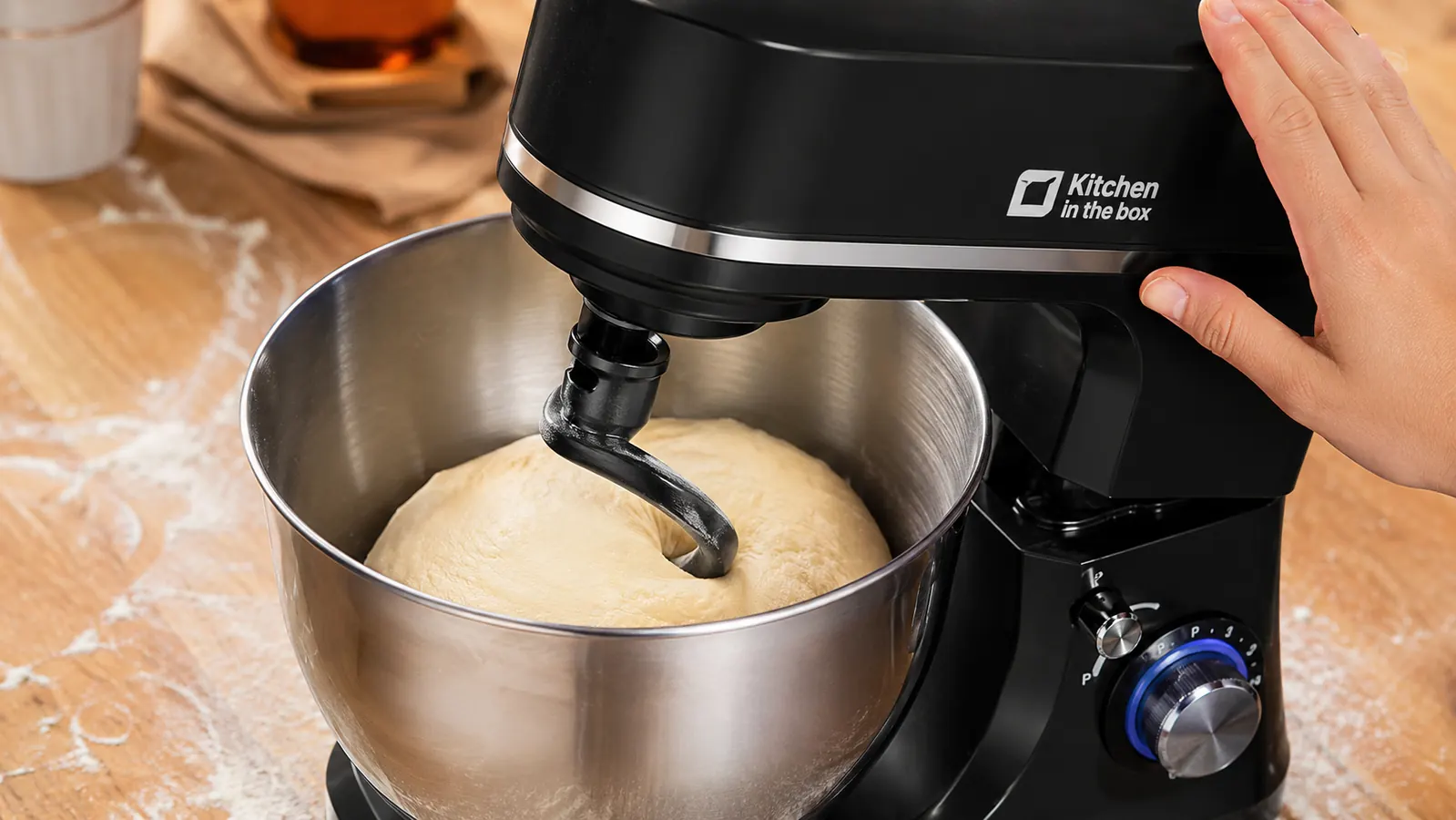
Where the Kitchen in the Box Wins
The Kitchen in the Box's biggest advantage is that it works without me standing over it. I lock the dough hook in, drop in flour and water for no-knead bread, and go answer email or wipe down the rest of the kitchen while it kneads for eight minutes straight. My arm never gets tired because my arm isn't doing anything. That's the whole point of a stand mixer over a hand mixer, and it's the difference that matters most for anything that needs sustained mixing rather than a quick beat. I go into the small-kitchen math behind choosing a compact stand mixer over a full-size one in this piece.
Power is the other real win. Six speeds sounds like a small spec until you're kneading stiff bread dough on speed two and the motor doesn't bog down or stall, which is exactly where the Hamilton Beach struggled in my test. The Kitchen in the Box also came with a dough hook, a wire whisk, and a flat beater in the box, so I wasn't buying separate attachments to cover cookies, whipped cream, and bread in the same week. For anyone who bakes more than one kind of thing, having all three tools already in the box instead of hunting down accessories later is worth more than the spec sheet suggests.
Where the Hamilton Beach Wins
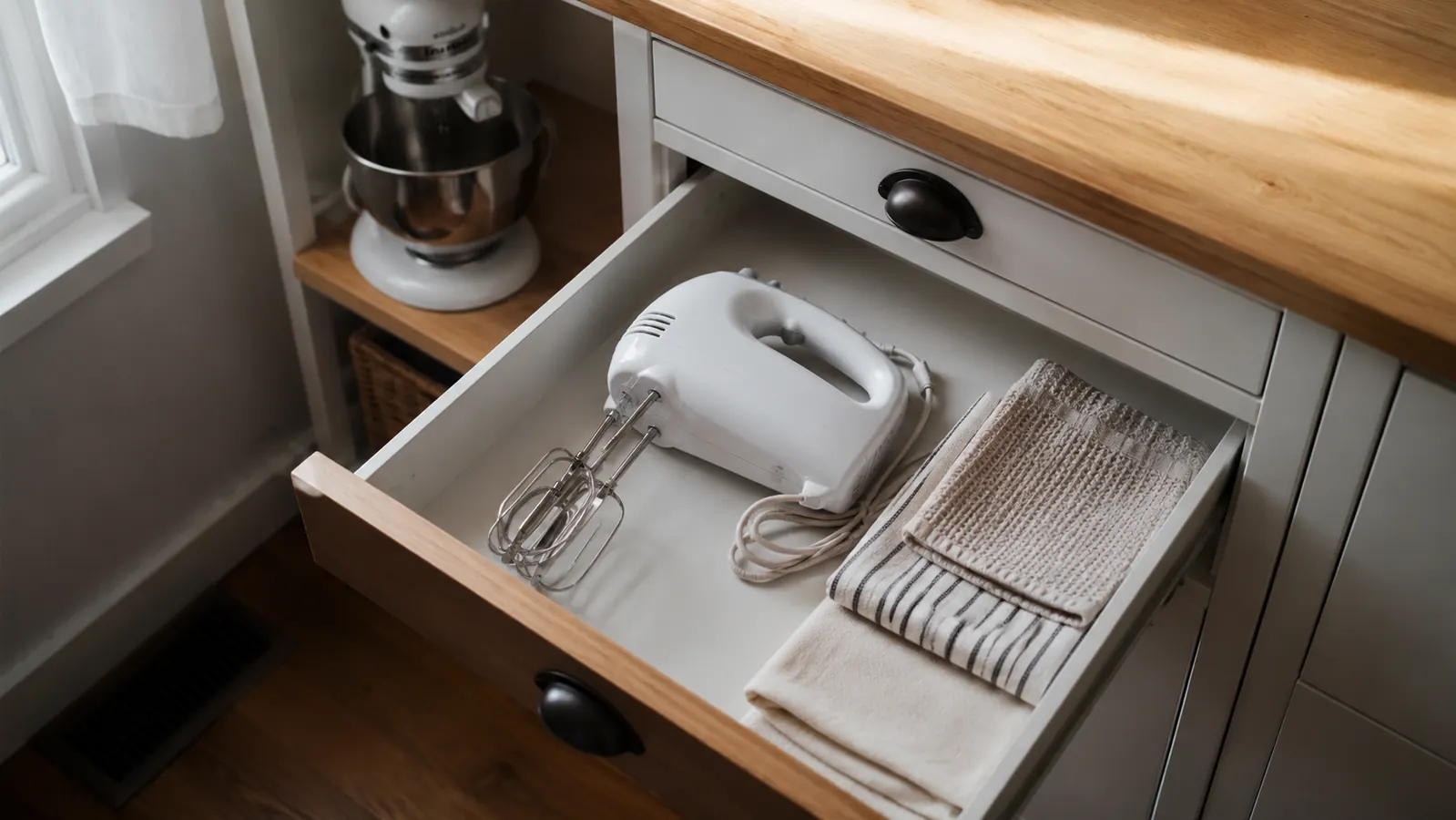
The Hamilton Beach's win is size, and it's not a small one. It weighs under three pounds and slides flat into a drawer, which means it disappears completely between uses. The Kitchen in the Box, by comparison, needs a fixed spot, either a shelf, a cabinet with enough clearance for the head to tilt back, or a permanent patch of counter. In a kitchen where every inch of counter is already spoken for, that difference decides the purchase before capacity or power even enters the conversation. If storage is genuinely tight, the hand mixer's ability to vanish into a drawer is not a minor convenience, it's the whole reason to buy one.
Cleanup follows the same pattern. The Hamilton Beach's two beaters pop out and rinse clean in under a minute, no bowl to wash separately, no splash guard to wipe down. The Kitchen in the Box has more pieces touching batter, the bowl, the beater or hook, and the splash guard if I've used it, and all of it needs washing before the next use. On a night when I'm cooking dinner and baking dessert back to back, that's real time, not a small annoyance. I told the fuller story of switching from a bulky stand mixer down to this compact one in this piece.
The Kitchen in the Box does the waiting so I don't have to. The Hamilton Beach does the disappearing so my counter doesn't have to. Neither one does both.
Batches and Timing: What Each One Can Actually Handle
Volume is where the gap gets obvious fast. The Kitchen in the Box's 3.2 quart bowl handles a full batch of cookie dough, two dozen cookies worth, in one run without the bowl feeling crowded. Try that same batch in a mixing bowl with the Hamilton Beach and the beaters start flinging flour out of the bowl before the dough comes together, because a hand mixer isn't built to work through a thick, heavy dough the way a stand mixer's geared motor is. I had to mix that batch in two smaller rounds with the hand mixer just to keep it from stalling.
Whipped cream and thin batters are a different story. For a small bowl of cream for two people or a simple box cake mix, the Hamilton Beach gets there just as fast as the Kitchen in the Box, sometimes faster, because there's no bowl to lock in and no attachment to swap first. If your baking mostly stays in that lighter category, the Kitchen in the Box's extra power and capacity go mostly unused, and you end up carrying around an eight-pound appliance to do a job a lightweight hand mixer already does well.
Noise, Mess, and the Real Cost of Cleanup
On high speed, the Kitchen in the Box is loud enough that I wouldn't run it while someone's on a phone call in the next room, closer to a blender than a quiet kitchen tool. The Hamilton Beach is quieter at its lower speeds, but it strains audibly, a rising whine, when it's pushed into anything thicker than cake batter, which tells you the motor is working harder than it's built for. Neither one is silent, but the Kitchen in the Box's noise at least means it's doing the job instead of struggling against it.
Mess is close to a wash between the two, honestly. The stand mixer's splash guard keeps flour from flying, but the bowl itself needs a full wash after every use. The hand mixer has no splash guard at all, so I've had flour dust the counter more than once with it running on speed four, but the two beaters take fifteen seconds to rinse. I walk through my actual routine for keeping either one from turning into extra dishes in this guide.
Long-Term Reliability: What Wears Out First
Motors are the part that fails first on any small appliance pushed past what it's built for, and that's exactly what I watched over months of using both. The Kitchen in the Box's motor has handled repeated bread dough without overheating or slowing down, likely because six speeds and a dough hook mean it's engineered for that kind of resistance. The Hamilton Beach's motor, by contrast, is built for eggs and cake batter, not dough, and pushing it past that use case regularly is the fastest way to burn one out early.
Both brands back their mixers with a one-year limited warranty, so neither has a structural edge on paper if something fails. What I've noticed in practice is that the stand mixer's failure points are mechanical, the gears and the tilt hinge, while the hand mixer's failure points are almost always the motor itself giving out under load it wasn't designed to handle. If you buy a hand mixer and never ask it to do more than beat eggs or whip cream, it'll likely outlast its warranty with no trouble at all.
Who Should Buy Which
Buy the Kitchen in the Box if you bake more than once a week, if bread dough or stiff cookie dough is a regular part of your routine, or if you want to walk away while something mixes instead of standing over a bowl. Buy the Hamilton Beach, or a hand mixer like it, if your baking mostly stays light, if counter and cabinet space are already fully claimed, or if you're not ready to commit a permanent spot to an appliance you might use twice a month. I go through six months of daily use with the Kitchen in the Box, including the weeks I regretted it, in my full review.
Real bread dough, real cookie batches, no arm cramp: that's the Kitchen in the Box's whole job.
Check today's price and see if the 3.2 quart Kitchen in the Box is in stock for your kitchen.
Amazon Check Today's Price on Amazon →