
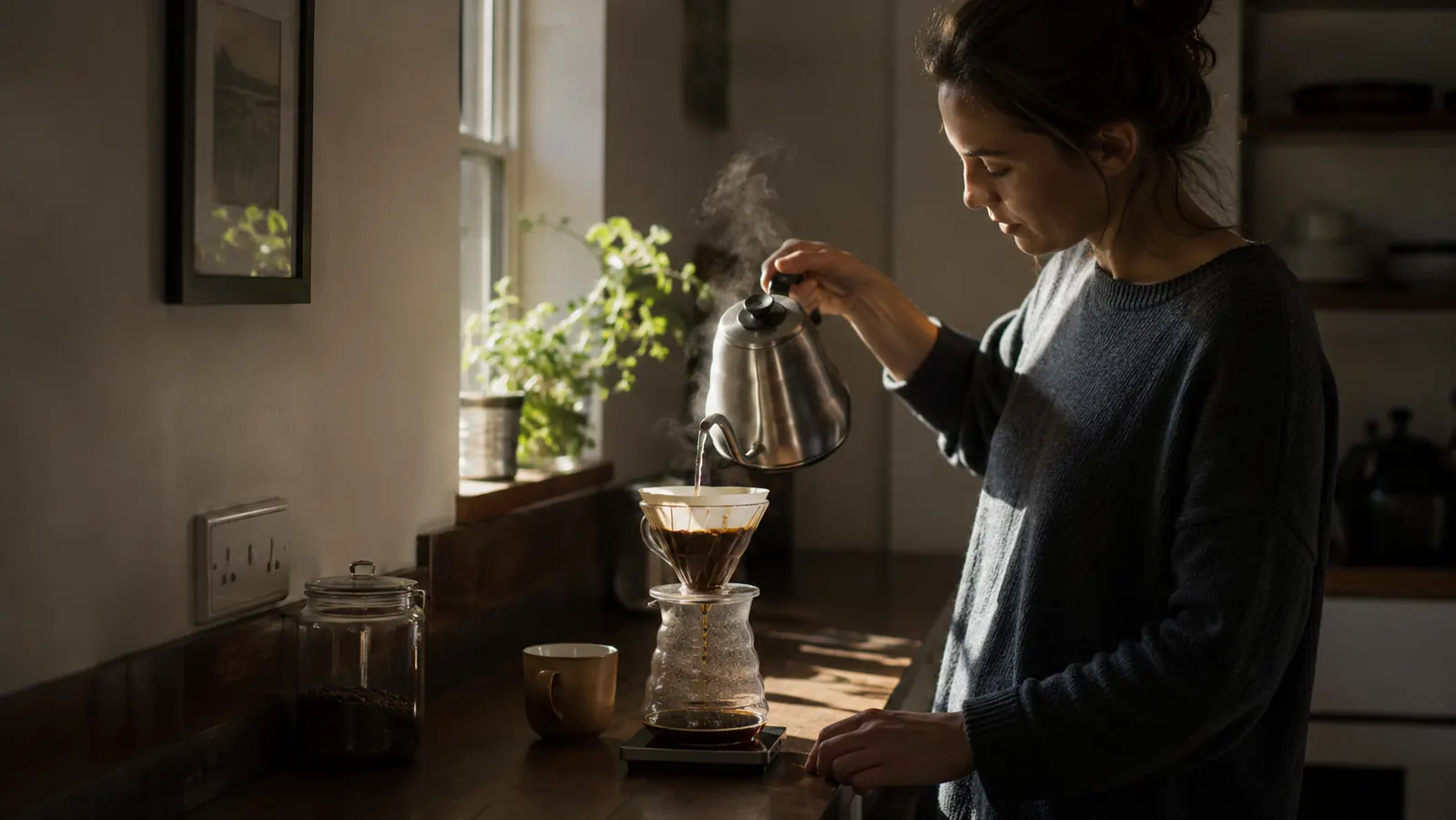
My pour-over coffee tasted burnt for the better part of a year and I spent most of that year blaming everything except the actual cause. I blamed the beans and bought a different bag. I blamed the grind and adjusted it three separate times. I blamed the filter, the water, the mug, the amount of coffee I was using. What I never once questioned was the kettle, because a kettle is a kettle, it boils water, how much difference could it possibly make. Then I bought a Willow & Everett gooseneck kettle with a temperature dial on the base, and the burnt taste was gone inside of two days.
The kettle I had before was a basic plastic model with one button and one setting, which is to say full boil, every time, no exceptions. I did not know that mattered for coffee until I actually looked into it. Water at a rolling boil scorches coffee grounds and pulls out the bitter compounds along with the good ones, and pour-over is more sensitive to that than a drip machine because you are pouring directly onto exposed grounds instead of through a basket that spreads the heat out. I had been dumping boiling water straight onto my coffee every single morning for years without knowing that was the problem.
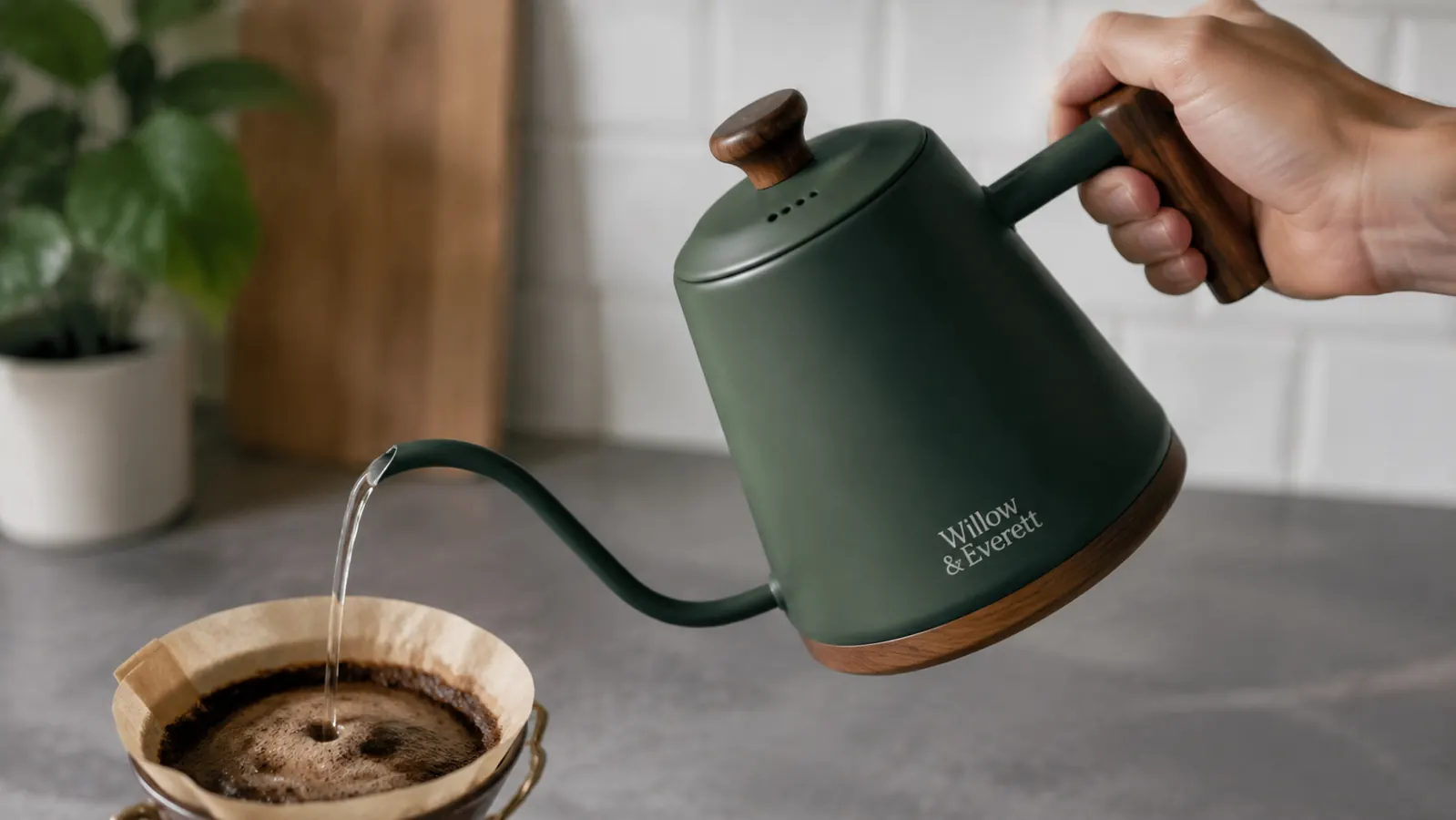
The spout was the other half of it. My old kettle had a wide, stubby spout built for filling a mug fast, not for controlling a thin, steady stream. I would tilt it and get a splash instead of a pour, which meant some grounds got soaked all at once and others barely got wet, so the cup came out unevenly extracted on top of being too hot. I did not connect any of this at the time. I just knew the coffee tasted bad and I kept adjusting the wrong variables.
My kitchen does not have room for a coffee station, so whatever I bought had to sit on the same eight inches of counter as everything else I use before the day starts, whenever that day happens to start. Some mornings I am up early, some mornings I am not, and my brewing routine has to work regardless of the hour. That ruled out anything bulky or anything that needed babysitting. A gooseneck kettle with presets sounded like exactly the kind of thing that would sit there looking nice and then annoy me the first time I actually used it.
I had been blaming the beans for a year. It was the water the whole time.
Stop Guessing at Your Water Temperature
If your pour-over tastes scorched no matter what beans you buy, the water is very likely the reason, and this kettle takes the guessing out of it.
Amazon Check Today's Price on Amazon →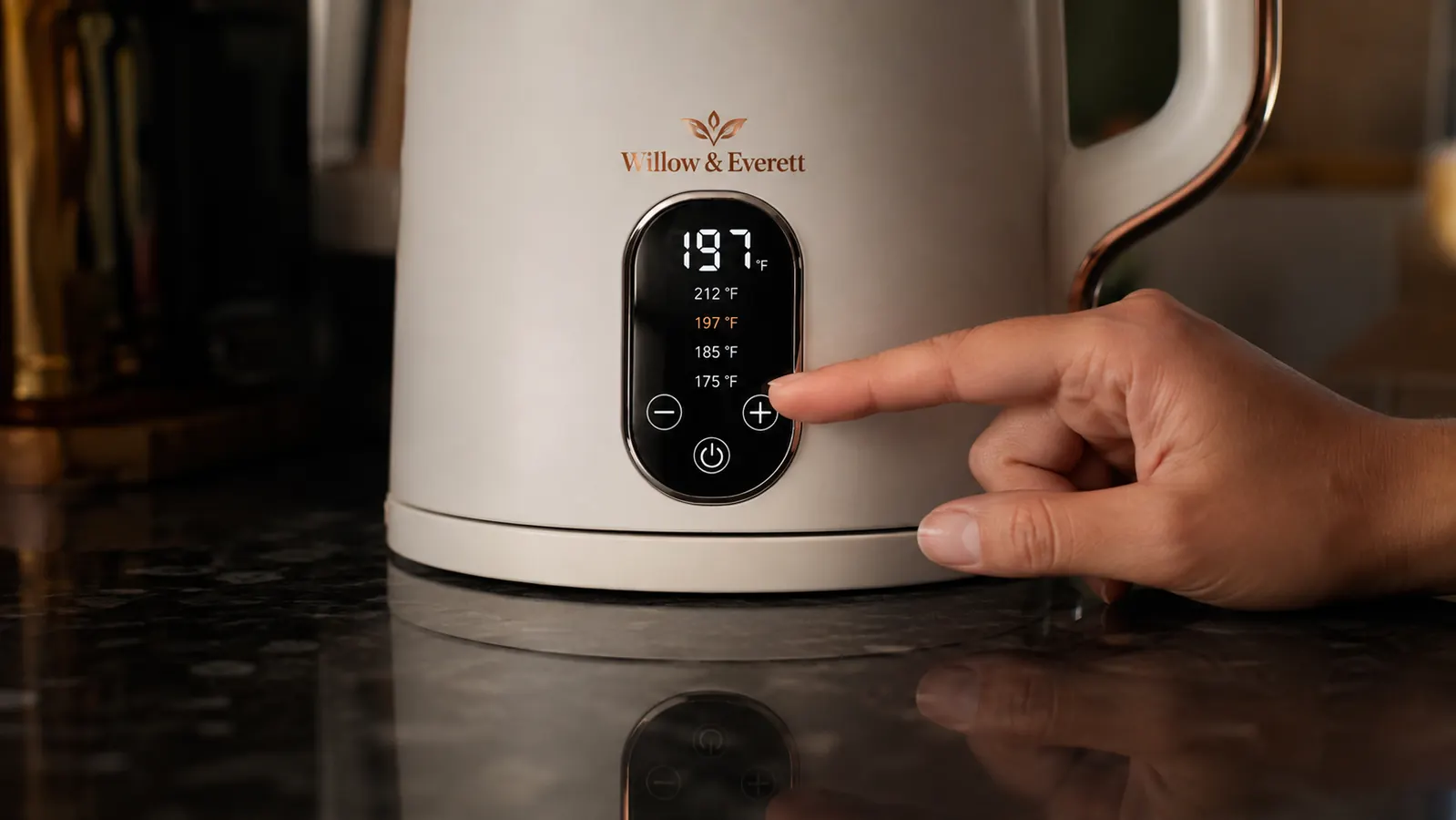
It did not annoy me. I set the dial to the preset closest to what most pour-over guides recommend, just under boiling, and let it heat while I ground beans. The display counts up and shuts off automatically once it hits the number I picked, so I stopped standing over it waiting for a whistle or guessing when to pull it off a burner. The Willow & Everett kettle has a keep-warm option too, which I use more than I expected, mostly on mornings where I get distracted between heating the water and actually pouring it.
The spout is the part that actually changed the coffee. It comes to a narrow point and lets me control the stream down to something closer to a trickle than a pour, so I can wet the grounds evenly instead of flooding one side of the filter. I wrote out the exact pour pattern I settled on in a separate guide to making pour-over with a gooseneck kettle if you want the specifics, but the short version is that the kettle made the pour slow and controlled enough that I could actually follow a method instead of improvising one every morning.
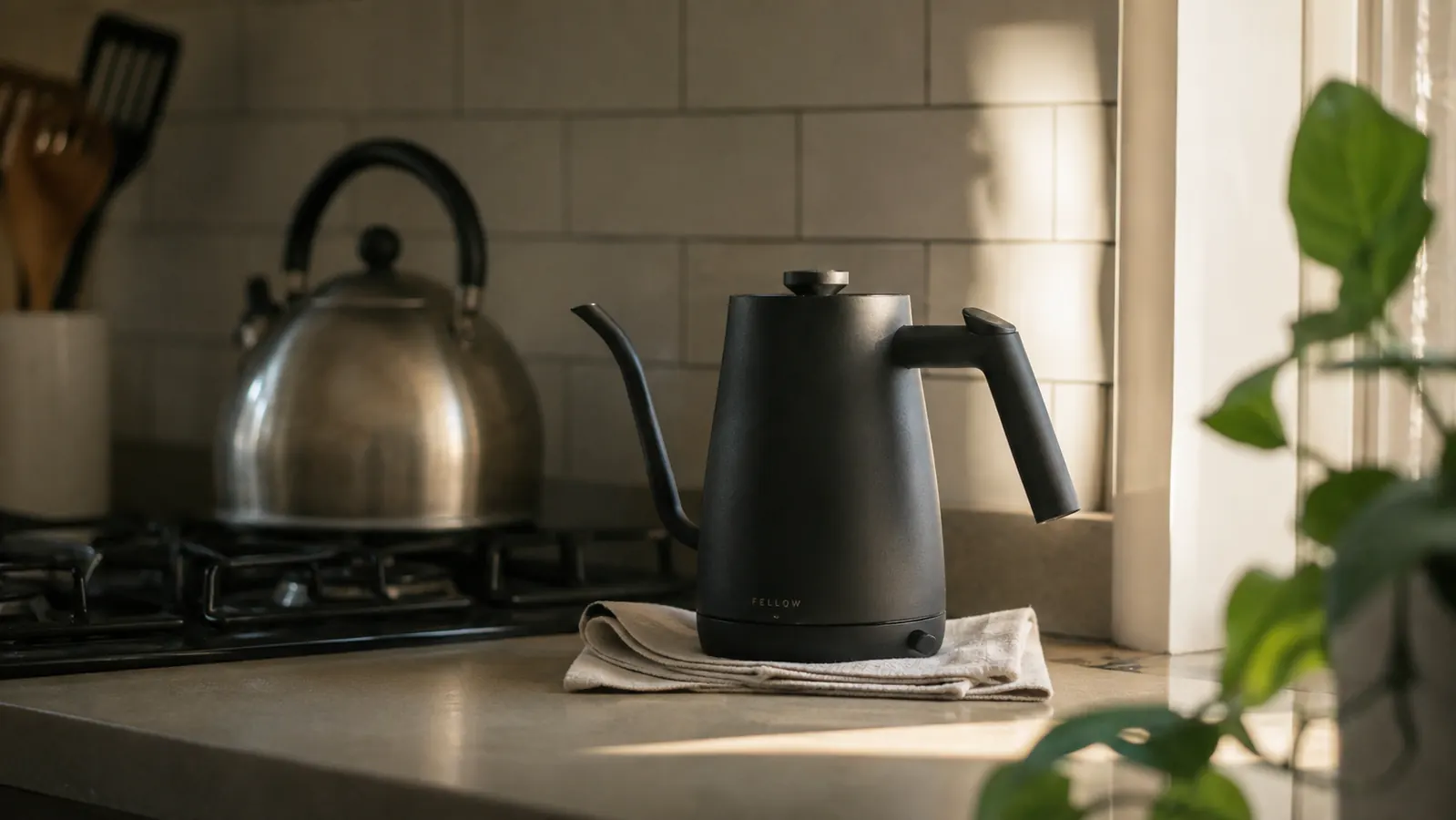
I did look at a plain stovetop gooseneck kettle before landing on the Willow & Everett, since a stovetop model would have been cheaper up front and taken up less counter space. I even wrote up how that comparison actually shook out, electric against stovetop, side by side, because the tradeoffs are not as obvious as they look. What decided it for me was the temperature control. A stovetop kettle only tells you when water is boiling, it can't stop short of that on its own, and stopping short of boiling turned out to be the entire fix.
None of this fixed my schedule. I still make coffee at whatever hour the morning actually starts, not the hour I planned on. What changed is that the coffee itself stopped being the variable I had to think about on top of everything else. I have since put the kettle through six months of daily use, and if you want the longer version of how it has held up, that account is written up separately from this one.
What I'd Tell You If We Were Sitting at My Kitchen Table
If you asked me across my own counter whether this is worth the switch, I would ask first whether your coffee tastes bitter or scorched more mornings than not, because that is the specific problem this fixes. It will not make cheap beans taste like expensive ones, and it will not turn a rushed morning into a slow one. What it does is take one variable out of your hands so you stop having to guess at water temperature and pour speed every single day. That is a smaller promise than most kitchen gadgets make, and it is the reason I still believe it.
The Kettle I Reach for Every Morning Now
Months in, this is still the first thing plugged in before coffee happens, and the bitterness has not come back once.
Amazon See Today's Price on Amazon →