
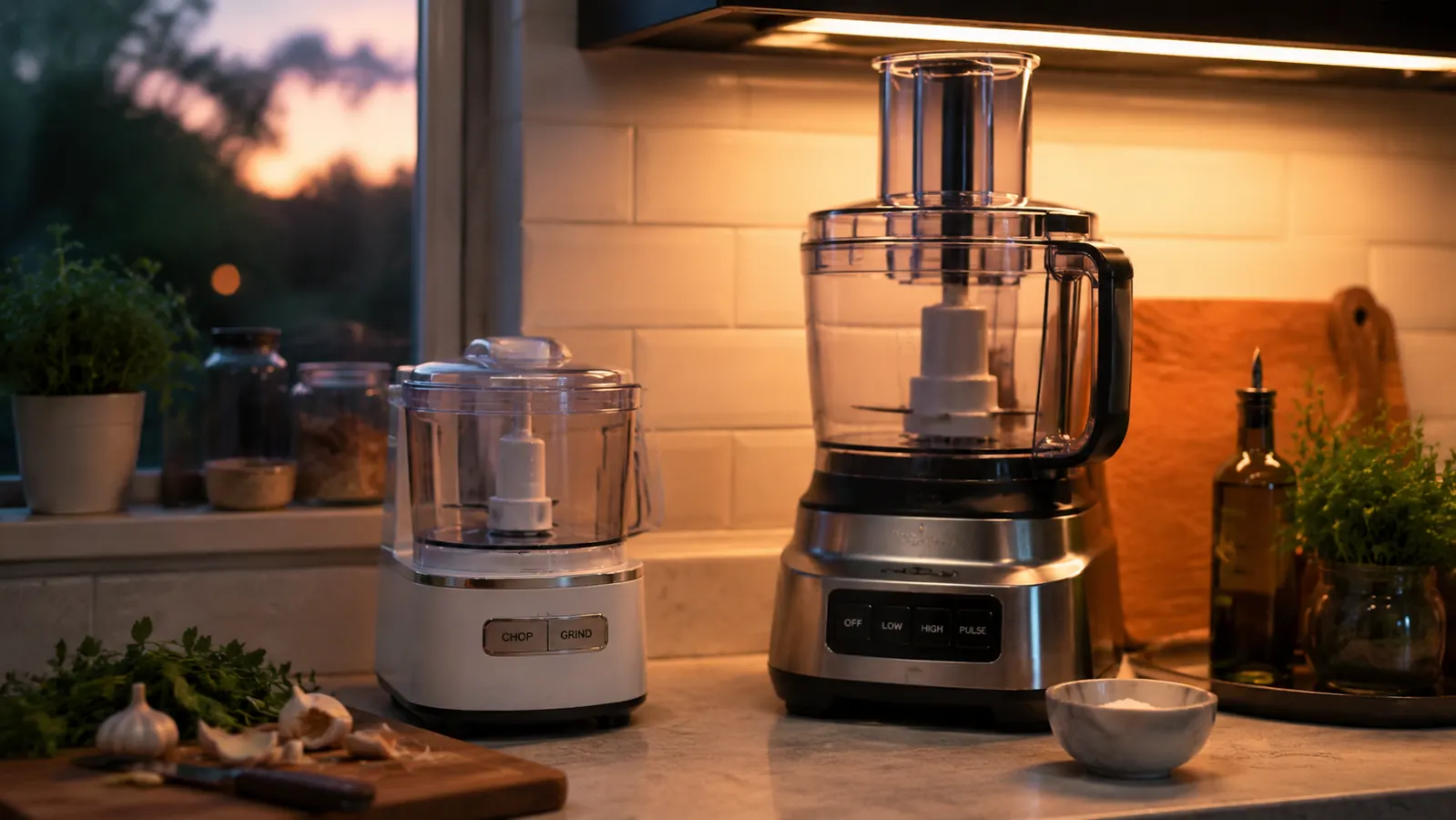
Most nights I'm not cooking for six, I'm cooking for whoever's actually home, and some nights that's just me. That's the real gap between the Cuisinart Mini-Prep Plus, a 3-cup food processor small enough to keep in a drawer, and a full-size food processor built to handle a 10-cup batch of pie dough or a week's worth of shredded cabbage. I've used the Cuisinart daily for mincing garlic, onions, and herbs, and I ran a Hamilton Beach 10-Cup Food Processor alongside it for a few weeks to see where the bigger machine actually earns its counter space. Short answer: if your cooking is mostly small jobs, garlic for tonight's sauce, a handful of herbs, a wedge of hard cheese, the Cuisinart wins on speed and cleanup. If you're regularly processing large batches, shredding a full head of cabbage, or kneading dough, the Hamilton Beach's extra capacity is worth what it takes up.
For this comparison I used the Cuisinart Mini-Prep Plus, the white 3-cup model with the reversible stainless steel blade, against a Hamilton Beach 10-Cup Food Processor, the model most people picture when they hear the words food processor. The Hamilton Beach isn't the priciest option out there, but it's the workhorse most home cooks land on, and it felt like the honest match for the Cuisinart rather than something with a bowl that dwarfs it three times over. If you want the full write-up on the Cuisinart on its own, six months in, I covered that in this review.
| What Matters | Cuisinart Mini-Prep Plus | Hamilton Beach 10-Cup Food Processor |
|---|---|---|
| Cost | Lower, one of the least expensive food processors sold | Moderately higher, several times the Cuisinart's cost |
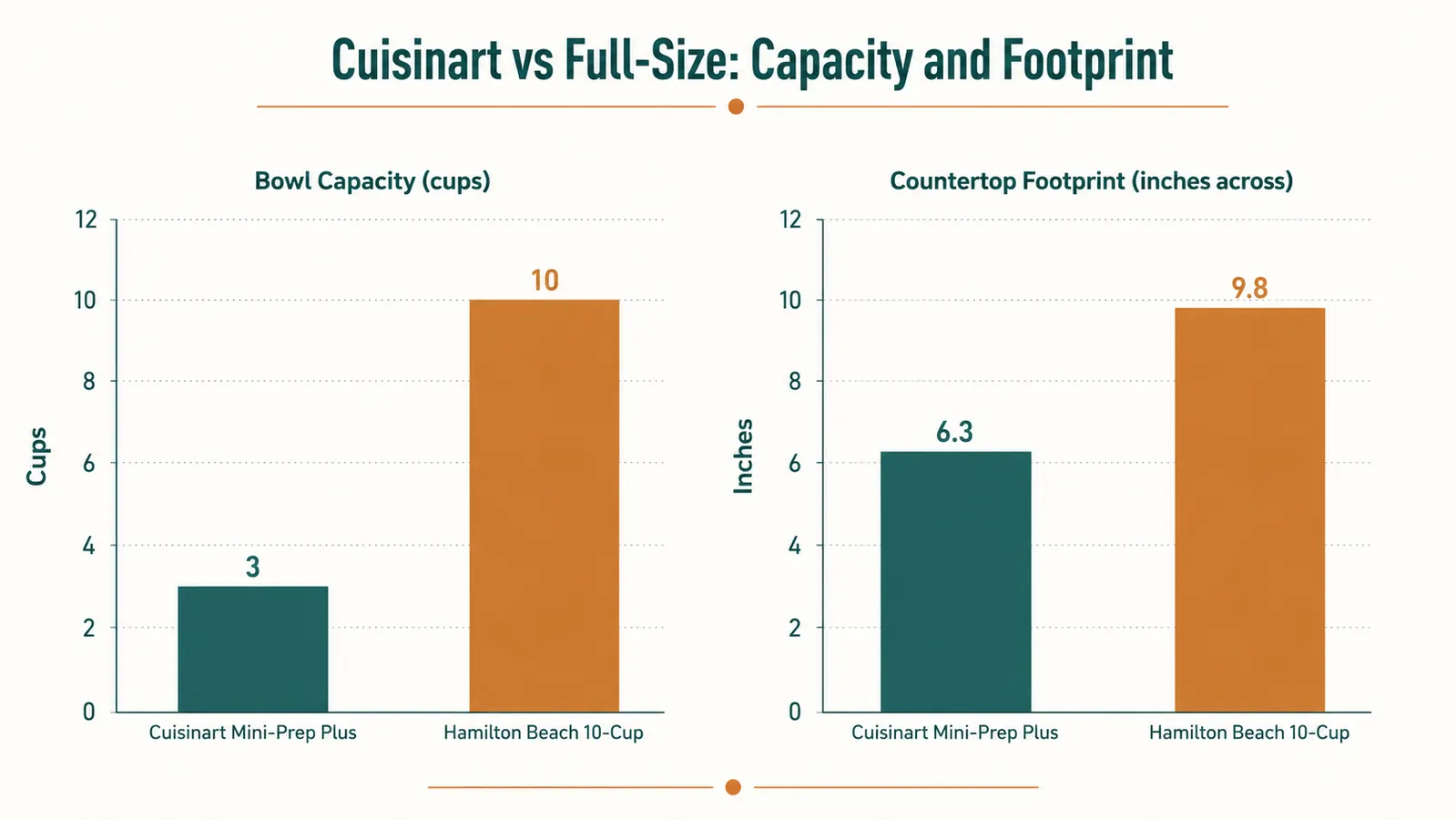
| Bowl Capacity | 3 cups, built for a single recipe's worth of prep | 10 cups, built for large batches and family-size meals |
| Countertop Footprint | About 6.3 inches across, fits in a drawer or small shelf | About 9.8 inches across with a tall bowl and lid stack |
| Blade and Attachments | Single reversible stainless steel chopping blade only | Chopping blade plus a slicing disc, shredding disc, and dough blade |
| Motor | Compact motor built for pulsing small ingredients | 450-watt motor built for continuous heavier loads |
| Cleanup | 4 parts total, small bowl rinses clean in under a minute | 6 or more parts including discs, larger surface area to scrub |
| Weight | About 2 pounds, easy to lift and stash with one hand | About 7.5 pounds, needs both hands to move and store |
| Warranty | 3-year limited manufacturer warranty | 1-year limited manufacturer warranty |
Mincing garlic for one pan, not a Sunday batch? The Cuisinart clears the counter before the pan's even hot.
One bowl, one blade, minced garlic or a handful of herbs done in the time it takes to preheat a skillet.
Amazon Check Today's Price on Amazon →Where the Cuisinart Wins
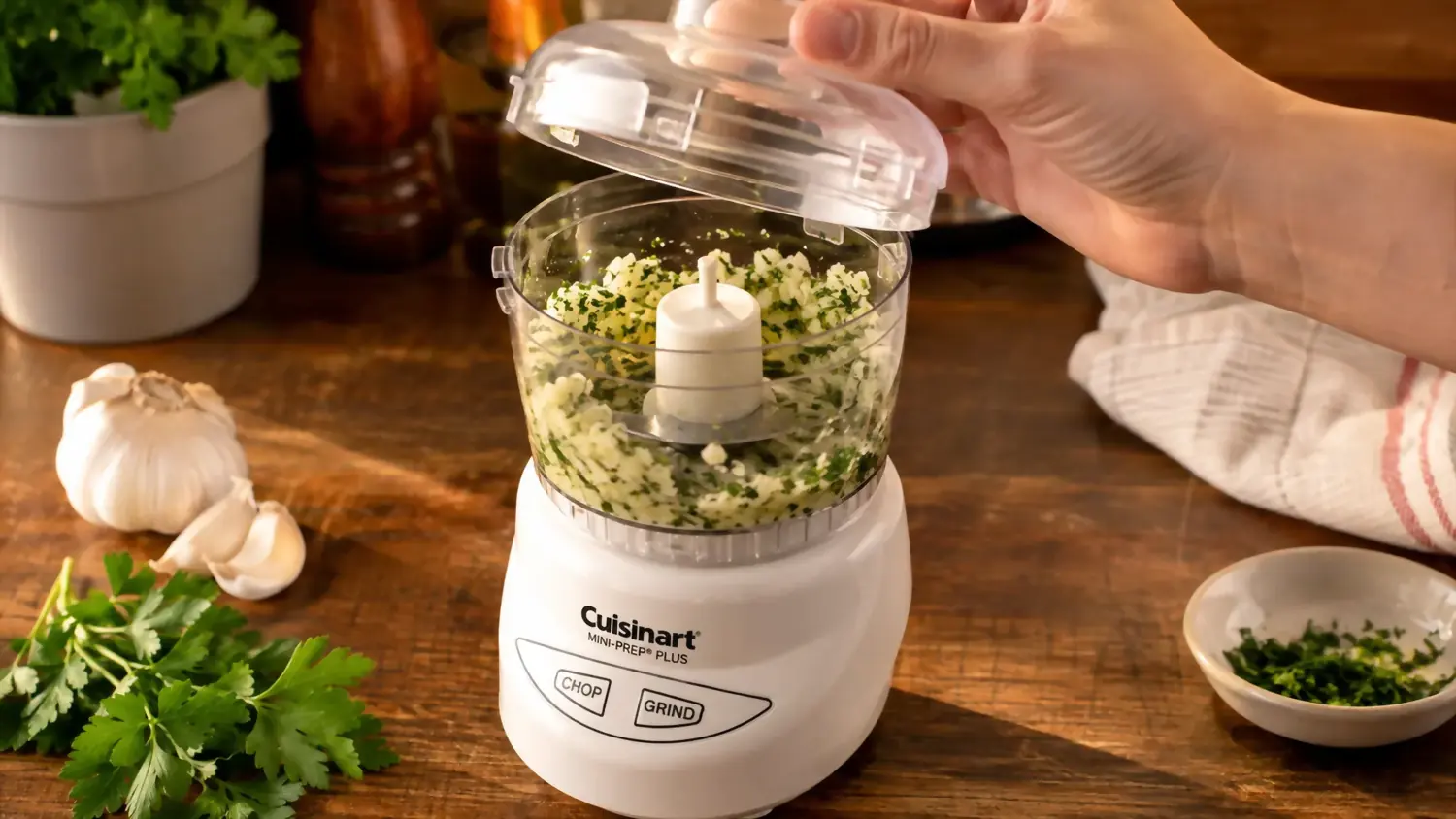
The Cuisinart's biggest advantage isn't a feature, it's restraint. A 3-cup bowl means I'm not dragging out a full-size base and stack of discs to mince two cloves of garlic and a handful of parsley. I drop everything in, pulse four or five times, and I'm done before the pan's finished heating. The bowl is small enough that the blade actually reaches everything in it, so I'm not scraping ingredients off the sides of a bowl built for triple the volume. When I'm cooking dinner after a long, unpredictable day, the Cuisinart is the appliance I reach for without thinking twice.
Size is the other real win. The Cuisinart takes up about as much counter space as a coffee mug and a saucer stacked together, and it's light enough to lift out of a drawer with one hand. In a kitchen where the counter runs out before the ambition does, that's not a small thing. The Hamilton Beach, by comparison, needs a permanent spot on a shelf. It's not unreasonably heavy, but pulling a nearly eight-pound base and a stack of discs out of a cabinet every night is exactly the kind of friction that gets a food processor abandoned in the back of a closet. I go into more of the small-kitchen math in this piece on drawer space.
Where the Hamilton Beach Wins
The Hamilton Beach's win is capacity, and it's not a small one. Ten cups of bowl space handles a full head of cabbage for slaw, a double batch of pie dough, or shredded carrots for a crowd, in one pass. The Cuisinart physically cannot do that. Try to push more than a couple of handfuls of anything past the halfway line on the Mini-Prep's bowl and you'll get uneven chopping, with the top layer barely touched while the bottom turns to paste. If you cook for more than two people on a regular basis or batch-prep for the week, the Cuisinart will leave you running it in rounds, and that erases most of its speed advantage.
The Hamilton Beach also comes with attachments the Cuisinart doesn't have. A slicing disc, a shredding disc, and a dough blade turn one machine into four, at least on paper. It's not a sophisticated set, no adjustable slicing thickness, but it works, and it means the Hamilton Beach pulls double duty for tasks the Cuisinart was never built to touch, like kneading a batch of pizza dough or shredding a block of cheddar without pulling out a box grater. If your cooking style leans toward big-batch meal prep or baking, that attachment stack closes a real gap.
The Cuisinart is a food processor sized for the way I actually cook, one small job at a time. The Hamilton Beach is sized for the way a bigger kitchen cooks, several pounds of ingredients at once. Neither is wrong. They're just built for different counters.
Chopping and Texture: What Actually Comes Out of Each Bowl
Food processors get judged on convenience, but texture is where the size difference actually shows up. I ran the same task, two cloves of garlic and a small handful of flat-leaf parsley, through both machines. In the Cuisinart, everything stayed close enough to the blade that four short pulses produced an even, fine mince with no stray whole pieces hiding at the edges. In the Hamilton Beach's much larger bowl, the same small amount of garlic and parsley scattered toward the sides where the blade barely reaches, and I had to stop twice to scrape everything back toward the center before it chopped evenly.
Run the comparison in the other direction and the result flips. Shredding a full head of cabbage in the Cuisinart's 3-cup bowl isn't really possible, you'd be feeding it in tiny batches and dumping the bowl out a dozen times, which defeats the point of owning a food processor at all. The Hamilton Beach's shredding disc took the same cabbage down to even, consistent ribbons in one continuous pass. Stay inside each machine's intended range, a small job for the Cuisinart, a big one for the Hamilton Beach, and both perform well. Push either one past what it was built for and the results get noticeably worse.
Footprint and Storage: What Fits in a Small Kitchen
I measured both units before deciding anything. The Cuisinart's footprint is roughly 6.3 inches across, about the same real estate as a large coffee mug. The Hamilton Beach runs closer to 9.8 inches across with its tall bowl and lid stacked on top, which is the difference between fitting on a single cabinet shelf gap and needing a dedicated spot on the counter or a lower shelf you have to bend for. If your kitchen has a drawer or a shelf with a few spare inches, the Cuisinart slots in without a fight. If you've got a pantry shelf or counter real estate to spare, the Hamilton Beach's size stops being a problem.
Weight matters more than people expect too. At about 2 pounds, I can lift the Cuisinart out of a drawer, use it, rinse it, and put it back with one hand while I'm doing something else with the other. The Hamilton Beach, at roughly 7.5 pounds with its base and attachments, is a two-handed appliance to move, which changes whether it lives on the counter permanently or gets stored somewhere I have to make an effort to reach. I wrote about my full daily routine with the Cuisinart, warts included, in this honest review, and the step-by-step version of how I actually run it is in this guide.
Timing: Which One Fits an Unpredictable Schedule
My dinner hour moves around more than I'd like to admit. Some nights I'm cooking early, some nights it's much later, and a food processor that demands setup time doesn't survive long on my counter. The Cuisinart is four parts: base, bowl, blade, lid. I can have garlic minced and the bowl rinsed in under two minutes, start to finish, with no discs to click into place and no extra pieces to dry before I put them away. For a kitchen where cooking time is a moving target, that short setup matters more than any other spec on the box.
The Hamilton Beach takes longer simply because there's more to assemble, choosing the right disc, locking it into the shaft, fitting the tall bowl and lid together correctly before it will even run. That's not a flaw, it's the tradeoff for capacity and attachments, but it does mean the Hamilton Beach rewards a bit of planning. If you know you're prepping a big batch on a Sunday afternoon, the extra setup is a non-issue. If your schedule is genuinely unpredictable and you're deciding what's for dinner twenty minutes before you eat it, the Cuisinart's shorter setup and faster cleanup make it the easier habit to keep.
Long-Term Reliability: What Wears Out First
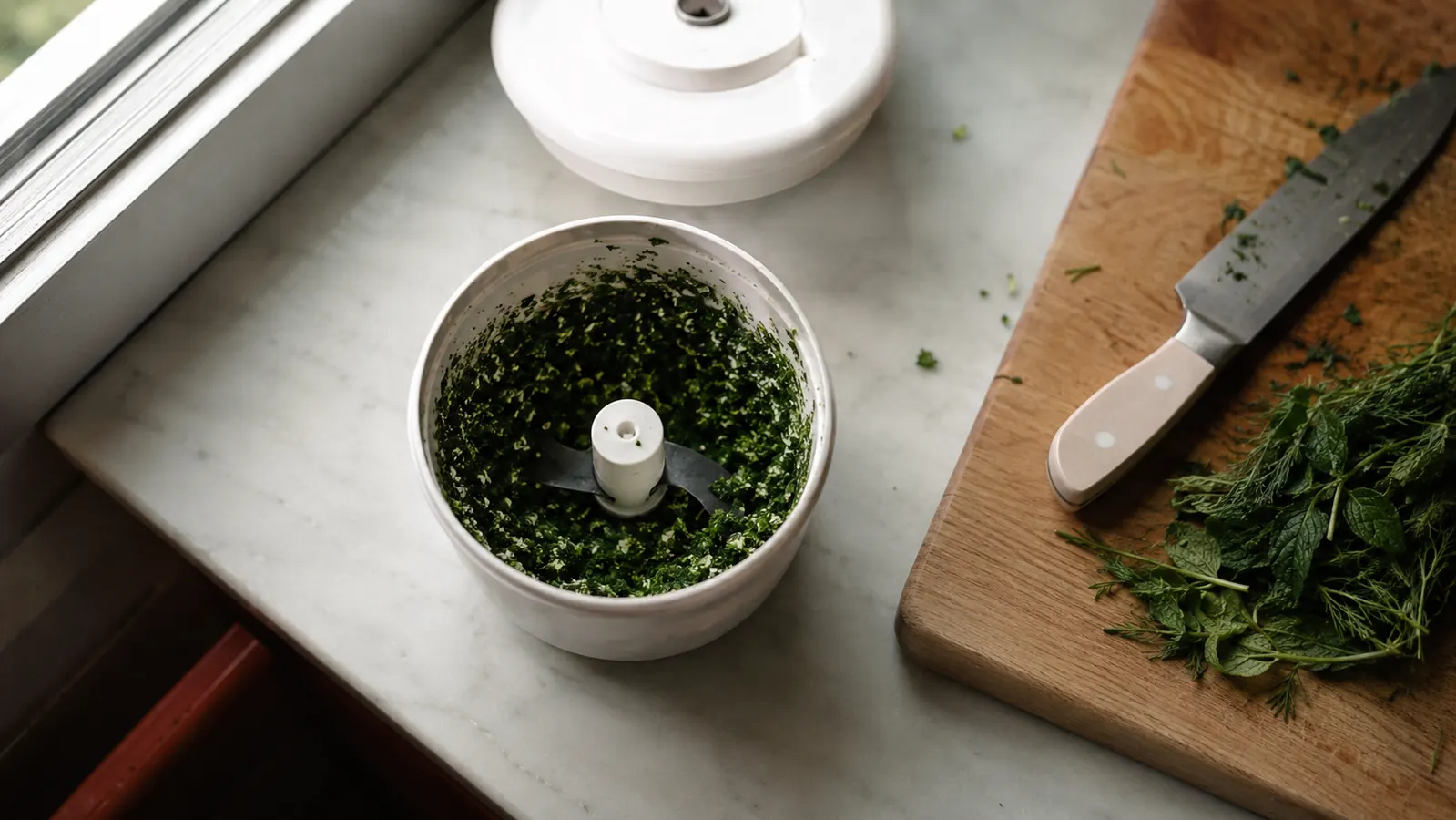
The blade is the part of any food processor that shows wear first, so that's what I watched closest over months of regular use. The Cuisinart's reversible stainless blade has held its edge well on soft to medium ingredients, herbs, garlic, soft cheese, though it struggles with anything genuinely hard, like whole nuts or ice, where the small motor just doesn't have the torque to push through cleanly. The plastic bowl has picked up light scratching from the blade after months of daily use, which is cosmetic rather than functional, but it's there if you look closely.
The Hamilton Beach's blade and discs face the same wear pattern but across a larger surface, and the extra attachments mean more parts that can chip or warp if they're run through repeated dishwasher cycles instead of a gentler hand wash. The Cuisinart carries the longer warranty on paper, 3 years against the Hamilton Beach's 1, though in practice both held up fine across my test window. What I've noticed is that the smaller Cuisinart is easier to inspect and easier to be careful with, simply because there's less of it to keep track of and fewer pieces that can go missing from a drawer.
Who Should Buy Which
Buy the Cuisinart if you're cooking small jobs most nights, mincing garlic, herbs, or a wedge of hard cheese, and if your counter or drawer space is already spoken for. Buy the Hamilton Beach if you're regularly processing large batches, shredding vegetables for a crowd, or kneading dough, and you have a dedicated spot for a bigger appliance. I ended up keeping the Cuisinart out on the counter and the Hamilton Beach in a cabinet for the handful of times a year I'm cooking for more than two people. Your ratio of small jobs to big batches should decide it for you. If you want the longer story of how the Cuisinart ended up being the one I reach for, I told it in full in this piece.
Small jobs, small counter: the Cuisinart is built for exactly that.
Garlic minced, herbs chopped, bowl rinsed, all in about the time it takes to set the table. Check today's price and see if it's in stock.
Amazon Check Today's Price on Amazon →